Pakistan Blocks Wikipedia Says It Hurts Muslim Sentiments: Breaking

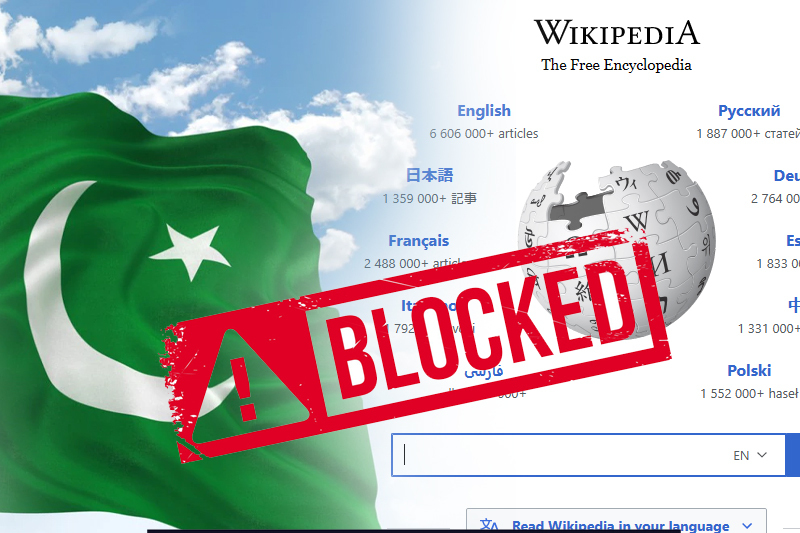
On Monday the media in Pakistan blocked the service of Wikipedia in their region. The reason behind it is that the content on Wikipedia was hitting Muslim sentiments.

The action by Islamabad came after a huge series of criticism and condemnation from the public, but the action is a blow to digital rights.

Under the controversial blasphemy laws of Pakistan, anyone found guilty of insulting Islam or its figures can be punished by death. However, the country does not yet have a provision for the death penalty for blasphemy.

Claims of a crime are often enough to incite mob violence and even fatal attacks. Domestic and international rights groups say blasphemy charges are often used to intimidate religious minorities and settle personal enmities.

According to a spokesman, the Pakistan Telecommunication Authority says it blocked Wikipedia because a 48-hour deadline to remove content was ignored. Malhat Obaid, on behalf of the regulator, said, “Such things hurt the sentiments of Muslims.”

Though the talk between Wikipedia officials and officials of Pakistan are in touch. The ban can be removed from Wikipedia if the platform completely removes anti-Islam content from its website.

This Saturday the Wikimedia Foundation confirmed the ban implemented by Pakistan. Team Wikipedia stated on their official nodes that “We hope that the Government of Pakistan will join its commitment to knowledge as a human right and immediately restore access to @Wikipedia and Wikimedia projects so that the people of Pakistan can obtain and share Carry on.”

About Freelance writer

As a passionate freelance writer, I delve into the intricacies of human rights, work-life balance, and labour rights to illuminate the often overlooked aspects of our societal fabric. With a keen eye for detail and a commitment to social justice, I navigate the complexities of these crucial topics, aiming to foster awareness and inspire change.

Freelance writer

As a passionate freelance writer, I delve into the intricacies of human rights, work-life balance, and labour rights to illuminate the often overlooked aspects of our societal fabric. With a keen eye for detail and a commitment to social justice, I navigate the complexities of these crucial topics, aiming to foster awareness and inspire change.

Recent Posts

Menstrual Leave Compliance Checklist: What Companies Must Implement Before Government Crackdown

With changes in laws regarding the workplace in India, menstrual leave Compliance is emerging as an issue that is making…

April 22, 2026

Zomato & Swiggy Riders Alert: How to Register for the Government-Backed Accident Insurance?

Food delivery riders operating on platforms such as Zomato and Swiggy have to face the risk of accidents on the…

April 22, 2026

French Senate Sparks High-Stakes Debate on the European Council for Fatwa and Research

Recently, the activity of the French senator Nathalie Goulet in the French Senate has raised new discussions regarding the role…

April 22, 2026

Heatwave Compensation in India: The Fight for ‘Right to Cooling’ and Worker Protection Laws in 2026

Increased heat in India has made heatwaves a major challenge to the general health and labour. The call to heatwave…

April 22, 2026

Telangana Transport Crisis: Best Travel Alternatives During TGSRTC Bus Strike

The current strike of Telangana State Road Transport Corporation has caused a crippling effect on mobility in the state. As…

April 22, 2026

EPF Withdrawal Rejection? Common Reasons and How to Fix Them in 2026

The Employees Provident Fund Organisation (EPFO) serves as a safety net to many of the salaried employees. However, as you…

April 21, 2026

This website uses cookies.

Read More