The Workers Rights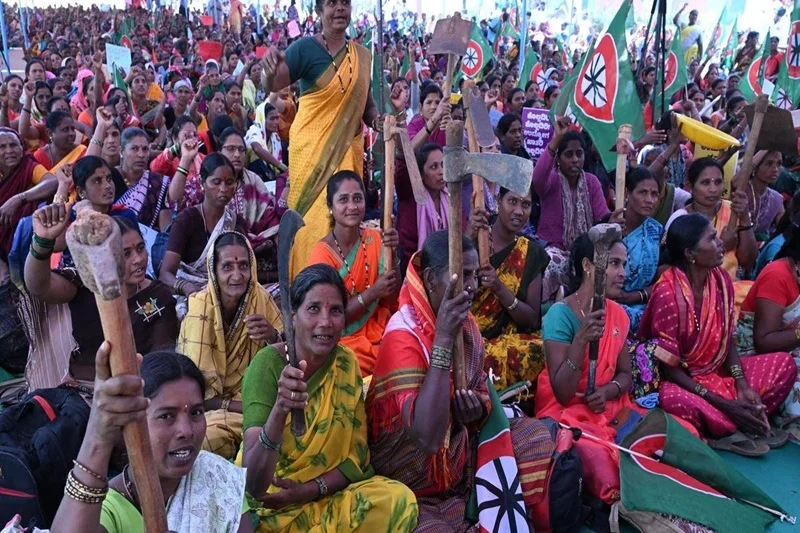
(C): X
Last updated on August 3rd, 2026 at 05:55 am
MGNREGA workers around the country are raising alarm in India. The “landmark rural employment guarantee law” has been scrapped and a new government scheme has taken its place from July 1 — but unions say workers could face up to 83 days of guaranteed jobs per year as a result of the change. According to the government, the new scheme will offer a 125-day job. The true figure is closer to 42, according to worker advocacy groups. An indefinite national protest is now being considered— and it has never been more important for millions of people in rural areas.
Quick Facts
| What’s being replaced | The MGNREGA programme has been implemented since 2006. |
| Replacing scheme | VB-G RAM G (Viksit Bharat-Guarantee for Rozgar and Ajeevika Mission Gramin) |
| Effective date | July 1, 2026 |
| Government’s claim | A total of 125 days of work under the new scheme. |
| Unions’ counter-claim | The number of days for real work will be 42 days. |
| Days at risk | 83 days (125 minus 42) |
| Who is protesting | NREGA Sangharsh Morcha + Joint Platform for Agricultural and Rural Workers Unions. |
| Protest type | Until the new law is repealed, indefinite and nationwide — |
What Is Changing on July 1?
Since 2006, the MGNREGA – Mahatma Gandhi National Rural Employment Guarantee Act – has been the core of rural livelihood assistance in India. It guarantees 100 days of wage employment to rural households, legally ensuring a right to work for people who are compelled to work under the threat of losing wages.
It will be replaced on July 1st with the VB-G RAM G scheme. This new scheme will provide up to 125 days of work and, on paper, an improvement on the previous one. Unions, however, have a different account to tell the MGNREGA workers.
MGNREGA vs. VB-G RAM G: What’s the Real Difference?
| MGNREGA | VB-G RAM G | |
| Legal status | Statutory Act – something that is legally binding. | There is no statutory guarantee of the government scheme. |
| The total amount of paid days required | 100 days guaranteed | 125 days claimed |
| Unions’ estimated actual days | ~125 days (in practice, varies) | ~42 days |
| Unemployment allowance | Yes if work is not provided otherwise; | Unclear |
| Worker entitlement | Legal right | Administrative benefit |
| In force since | 2006 | July 1, 2026 |
The problem isn’t only the days; it’s the enforceability of the law. Under MGNREGA, the work is guaranteed to the workers. They get an unemployment allowance if the work is not offered within 15 days. This is not guaranteed for a government scheme. It may be altered, shortened or terminated without legislation.
Why Are Unions Protesting?
The NREGA Sangharsh Morcha and the Joint Platform of the Agricultural Workers’ Unions and Rural Workers’ Unions have agreed to go on indefinite protest from July 1 to demand complete repeal of the VB-G RAM G and restoration of MGNREGA.
The main thrust of their argument: The 125 days promised in the new scheme are misleading. Adding to the lack of actual work hours available under VB-G RAM G, unions estimate roughly 42 days of work will be available to rural workers, resulting in 83 days of lost income for MGNREGA workers.
That’s not a policy change; it’s a crisis of livelihoods for families whose main or ancillary source of income is the MGNREGA.
What This Means for Rural India
The stakes are very high. Even though it is a relatively new programme, MGNREGA has traditionally been one of India’s most important poverty reduction programmes, generating employment for tens of millions of households, especially in lean agricultural seasons when work opportunities are limited.
A programme of this kind is being done away with, and its replacement is a government programme, which takes away one of the most effective modes of protection for the workers: to demand work as a legal right. However, critics complain that this gives all the control to the administration, giving employment guarantee workers no means of redress if the work is not produced.
FAQs
Why are MGNREGA workers protesting from 1st July?
The implementation of VB-G RAM G is to be effective from 1st July, 2016, in replacement of MGNREGA. Unions demand repeal of the new scheme, and have said that they will be staging an indefinite protest on the day it is launched.
Does the protest impact the rural work programmes right away?
The protest is being led by worker advocacy groups or unions. The direct impact on programme delivery will be dependent on the level of participation in states.
Is the ‘VB-G RAM G’ legally binding as the MGNREGA?
It’s the centre point. MGNREGA is a statutory Act which has legal commitments. VB-G RAM G is a government scheme that provides workers much less protection, and no unemployment allowance, critics charge.
What is the cost to the worker if VB-G RAM G provides fewer actual working days?
That 83-day gap, if it’s correct, would be a huge loss of income for rural families, especially those who don’t have another reliable source of income.
Key Takeaways
- Phase-out of MGNREGA scheme is going on since 1st July 2026 and VB-G RAM G is replacing this programme.
- In its place, a new act offers employment for 125 days but the government claims that it is less than 42 days.
- The guarantee of work provided to the MGNREGA labourers could now decrease by up to 83 days annually.
- The replacement of the law by the government’s initiative will deprive MGNREGA workers of their statutory right to ask for jobs.
- This act will continue as long as the unions of the country decide that 1st July is the beginning of indefinite strikes in the entire nation.
More Stories Worth Reading
Why Bring Soil To Delhi?
Uncover the message behind the protest.
Why Are Migrants Still Struggling?
Find the challenges affecting workers today.
Could More Safety Checks Follow?
Check out the demands from unions.
How Will Reforms Affect Workers?
Get to know the labour rights impact.
Need A New Job Card?
Browse the latest application process.