khushboo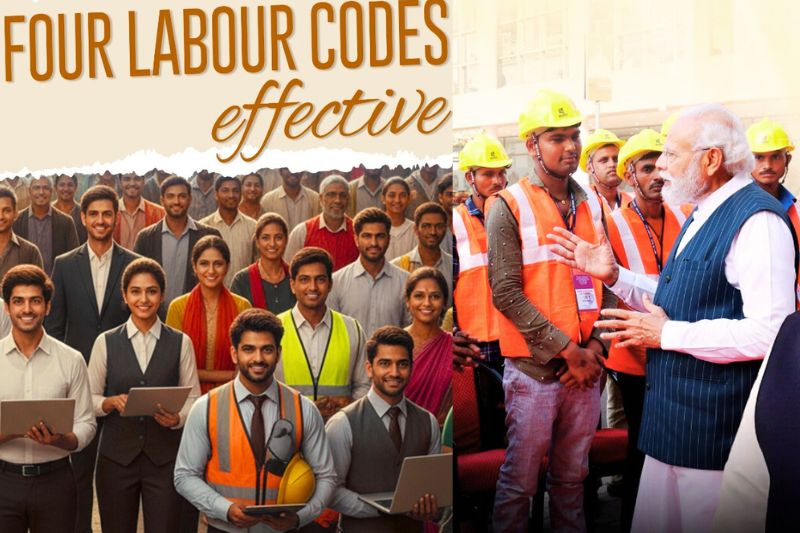
X
India’s new labour reforms have the potential to change the whole job market by increasing the number of jobs by 7.7 million and growing the total consumption of goods and services by 75,000 million rupees. These reforms have combined the 29 pre-existing labour laws into four main laws, thus making it easier to comply with the laws, the social security has been expanded and the employer’s rights have been made stronger. By creating a friendly atmosphere for businessmen and workers, the government aims to speed up the process of job creation, make wages clearer, and improve safety in the workplaces. The article below is going to point out the most important changes in the reforms, their anticipated impact on the job market and consumption, and the overall socio-economic favors for India. Learn more about employee rights and fair work policies on our Labour Rights page.
Key Labour Law Changes
- Job Creation Boost: The new rules will give rise to 7.7 million new jobs by schooling the informal sectors and inviting companies to grow their operations without overregulation.
- Simplified Compliance: Merging of laws means less paperwork as there will be one registration, one license, and one electronic return system for all which will not just make it easier for the employers but also make the law more powerful.
- Expanded Social Security: Gig and platform workers are now entitled to social security coverage, thereby, making an unprotected section of the workforce protected.
- Minimum Wage for All: Minimum wage rates have been made applicable to all workers with the removal of previous caps and thus, wage justice has been ensured for all skill levels and regions.
- Enhanced Worker Benefits: Increased maternity leave, provision for fixed-term employees to get gratuity, and formal employment through compulsory appointment letters are some ways to achieve the dignity of workers.
- Flexible Employment Norms: The limits for layoffs and retrenchments have been raised making it a win-win situation for employees as well as employers in the sense that it will encourage hiring while protecting the workers.
- Workplace Safety: The unification of occupational safety standards and the installation of mandatory committees in large workplaces have positively impacted the health and safety environments.
Read Also: 7 Middle East Countries With Labour Rights Reforms in 2025
Economic Impact and Consumption Growth
- It is predicted that the formal jobs will lead to an increase in consumption of around ₹75,000 crore due to the rise of disposable incomes and the power of consumer confidence.
- The process of formalization allows a larger section of the population to have access to financial services and protection from unemployment, which in turn, stabilizes the socio-economic situation.
- The reform policies are in line with India’s growth path and global competition, thereby attracting both domestic and foreign investment.
Broader Socio-Economic Benefits
- Working mothers are becoming part of the workforce due to maternity benefits and night-shift regulations.
- The use of digital inspections and algorithm-based compliance monitoring leads to the efficiency of enforcement, thus lowering evasion and raising workers’ rights.
- The reforms benefit micro, small, and medium enterprises (MSMEs) and less developed states in terms of economic growth, thus promoting inclusive and sustained economic growth.