The Workers Rights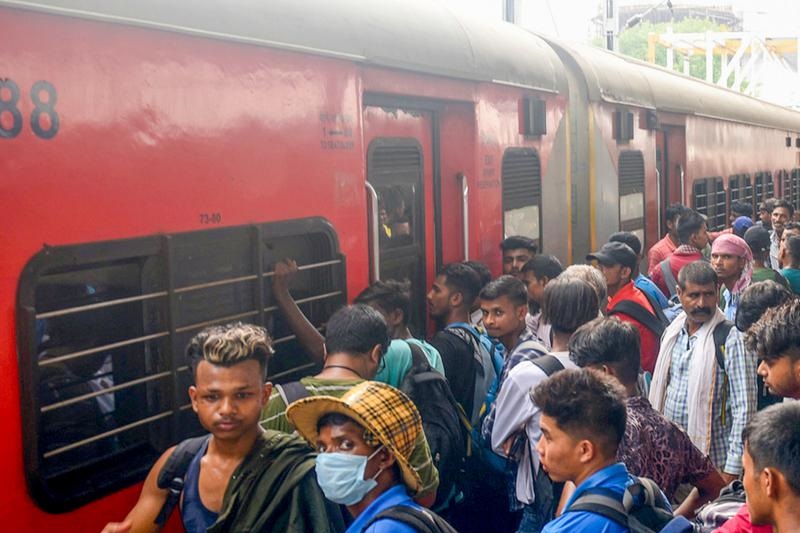
journey with migrants in an unreserved coach
“I have nothing left. My three children are all deceased. They are parents to young families. Whom would I approach and plead with to provide for us? How could we survive? Subhadra Gayen, a local of Bengal’s Sundarbans village of Chharnakhali, cries out.
Haran Gayen, Nishikanta Gayen, and Dibakar Gayen, three of her sons, used to commute to and from the southern states in search of employment.
They boarded the Coromandel Express on June 2 along with six other villagers for Andhra Pradesh, where they would work as daily wage laborers. Five of them traveled back home in caskets. Families are speculating the worst because there is still no information about what happened to the sixth villager.
The South 24 Parganas district, which has experienced the greatest number of casualties as a result of the Odisha train collision, is in the gloom. The district administration confirmed the deaths of 27 people as of the evening of June 4, the majority of whom were from the Sundarbans region. In addition, 19 people are still unaccounted for, and 103 other people have been hurt.
Keep Reading


The Coromandel incident brings to light Bengal’s dire situation, where widespread corruption and a lack of employment opportunities drive people to seek better fortune elsewhere. Despite the dangers, they continue to board southbound trains each year due to the allure of marginally better prospects.
“The village offers no opportunities for employment. There are no jobs available here. All of our men are compelled to look for work in southern states. The only people left in the village are the young, old, and women, according to Sumita Ghosh.
The reported data reveal an alarming and worrying aspect: all of the deceased, except for two, belong to minority or ‘lower’ caste communities, highlighting the hardships experienced by disadvantaged residents in rural Bengal.
The Coromandel Express, formerly called the “hospital express” in the 1980s and 1990s because it was well-liked by medical tourists traveling south, has recently earned a new moniker as the “migrant express.”
The agrarian crisis, climate change, and the National Rural Employment Guarantee’s limited employment opportunities drive people to look for greener pastures. Using the Place of Last Residence (POLR) methodology, migration data from the 2011 Census revealed that 2.4 million people, or 2.6% of West Bengal’s 91.3 million total population, reported being lifetime outmigrants.
The fact that this number is higher than the 1.7% reported in the 1991 Census indicates that the rate has increased since then. Male emigration has been more intense in areas of the state that are economically and agriculturally distressed.
We had a conversation with Saikat Mondal, who lives in Jogeshgunje GP under the Hingalgunj Police Station in the neighboring North 24 Parganas district.
Saikat, a school dropout who moved to Bengaluru at the age of 14, works at a packaging factory and receives a salary of Rs 15,000 per month. On the SMVT Bengaluru-Howrah Express, which collided with the Coromandel Express, he was making his way home. Once things calm down, he intends to go back to Karnataka because he can make more money there.
Ataur Molla, who was in one of the affected Coromandel Express compartments, on the other hand, said he would think twice about moving to another state if the government could offer him a different source of income.
To lead prayers (imamate) at a mosque, Ataur, a 25-year-old resident of Habaspur in the vicinity of Hasnabad Police Station, was going to Kerala. He was hurt, but on Sunday morning, with help from the West Bengal government, he made it back to his village.
We observed a group of migrant workers departing for Tamil Nadu as more bodies began to arrive from various parts of Hingalganj. Their standard response, when asked about their departure, was, “Will we starve to death in the village?”
Their ability to find work is essential to their survival, and this has made their fear of dying less important. The issue of whether life or livelihood comes first looms large. Given the circumstances, the best course of action is to put one’s livelihood first, followed by one’s quality of life.