 kritika
(C): X
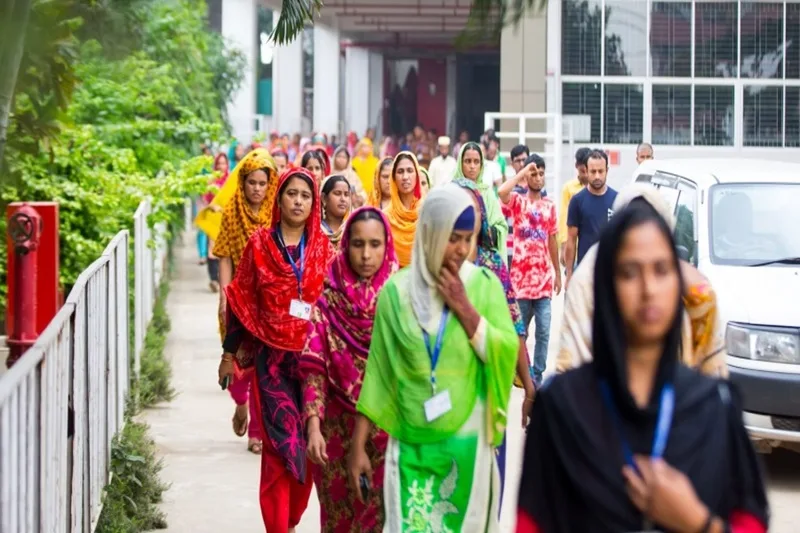
Since early November, wage protests have repeatedly shut down garment production in the garment belt across Bangladesh. But what happens to my income if the lines stop? That’s the practical question for the workers on the factory floor every time there is a shutdown. The turmoil that climaxed on November 24, 2026 shows how wages, production and consumer confidence are all interconnected and thus why people are worried about job security today.
Key Highlights on Bangladesh Garment Factory Shutdowns
- After China, Bangladesh is the second largest garment exporter in the world.
- The industry employs more than 4 million workers and accounts for more than 80% of the country’s export earnings.
- Workers have demanded the minimum monthly wage be raised to 30,000 taka (about $241) from the current 12,500 taka.
- Industry leaders say an increase above 15 per cent would be unsustainable.
- The Bangladesh Garment Manufacturers and Exporters Association (BGMEA) estimates the disruptions over 18 days have cost 317 factories about $428 million in lost production.
- Buyers moved orders of about $254 million to other countries.
What Happened on 24 November
Police fired tear gas and sound grenades amid road blockades by workers in a key industrial belt, as dozens of factories ceased operations, Reuters reported. In Gazipur, on the outskirts of Dhaka, protesters blocked a main highway and set fires after rumours spread that a worker had died. No workers were killed, a police superintendent said. Later, authorities closed nearby shops and paramilitary men were deployed along the route.
Meanwhile, a government-appointed wage board was in talks on a new minimum wage, a day after factory owners submitted their proposal. Syed Azad Subhani, its chairman, said talks were going on and he hoped for a decision the same day.
The Wage Gap Behind the Protests
Workers say soaring food, housing and transport costs make a case for more than doubling the minimum wage. Factory owners say costs are rising, global demand is weak and they can only absorb a limited increase. The talks of the wage board will be very important for household budgets, as no agreement has yet been reached on a figure from either side.
Why Workers Worry About Pay and Overtime
No pay cuts or lost overtime have been announced, the reporting does not say. But the reason workers are uneasy is the production losses. Many garment workers depend on regular output and overtime to supplement their monthly wage, so stoppages can mean fewer working hours and a less predictable income. If orders remain lost, factories may cut hours or hire less. This is a risk to keep an eye on, not a trend that is confirmed.
The Pressure on Factories
BGMEA figures show just how expensive the disruption has been. In addition to the $428 million in lost production, buyers also shifted some $254 million in orders to other suppliers because of fears of delays. Bangladesh supplies global retailers such as H&M, Gap and Walmart, and the unrest is testing the cost advantage that has underpinned its export success.
What Workers Should Watch
- What the wage board decided: The final minimum wage figure will set the pay benchmark.
- Order flow: Buyer orders would have to be picked up to ease pressure on hours and jobs.
- Factory notices: Rumours are less important than official announcements on shifts, overtime or closures, as happened in the Gazipur incident.
- Your rights: If you’re a worker concerned about unpaid wages or hours, you can get advice from a union or a labour office.
The Bottom Line
The protests are a sign of a real gap between what workers say they need and what employers say they can afford. A decent settlement and steady orders would help protect income, but prolonged unrest could strain hours and jobs. For now, workers will be better off following confirmed announcements from the wage board, employers and trade bodies.
Explore career breaks, workplace challenges, and fresh opportunities.
1. Is Taking a Career Break Worthwhile?
Discover the financial risks of starting over after a career break.
2. Which Jobs Suit Long Career Breaks?
Explore seven career options after an extended employment gap.
3. Where Can Solo Travelers Escape Work?
Browse five US destinations perfect for a refreshing solo getaway.
4. Is Your Job Affecting Your Health?
Spot five warning signs of workplace-related health problems.
5. Could Your Job Be Outsourced Soon?
Check out eight warning signs that your job may be outsourced.





Recent Comments