 kritika
(C): X
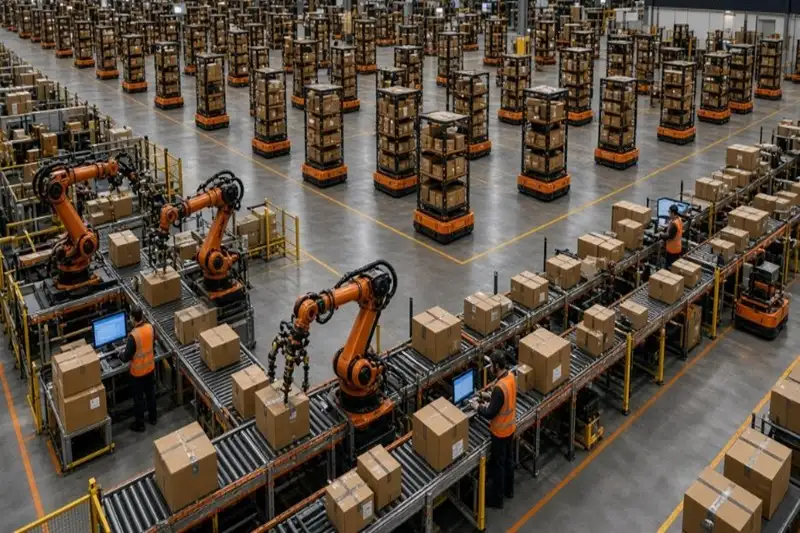
The Amazon warehouse industry is evolving rapidly, more so than in any year of Amazon’s history. There are now over a million robots operating throughout its network, and the machines that are supposed to deliver faster parcels are changing the who, how and what, as well as how much. When it comes to the 1.5 million workers at Amazon, automation isn’t an issue of “if” anymore; it’s an issue of “when.”
Quick Facts
- Robot fleet: Amazon’s robotic arms, floor-gliding drive units and heavy pallet movers have surpassed the 1,000 milestone for its fleet of robots.
- Employees: More than 1.5 million full- and part-time.
- What’s new: Robots physically interact with humans and impact the rate of work.
- Safety concern: Union researchers say tens of thousands of workers are injured every year.
- The big question: Will Amazon warehouse workers have jobs in an automated future?
Why the Work Feels Different Now
For years, factory automation has been separating machines and people. The robots were used to perform the dangerous or repetitive tasks in different areas, allowing humans to remain safe. Amazon’s model doesn’t follow that trend, says George Mason University business professor Brad Greenwood. It has robots rubbing shoulders with workers, and they are part of the decision-making process on how quickly each task should be completed. It’s quite a different offer than the previous generations of warehouse workers took.
Robots That Set the Pace
The fleet supports a fast fulfilment network. The company’s benefit is faster Amazon deliveries and reduced operating expenses. The same can apply to employees, where it may lead to more stringent productivity targets and less flexibility for a natural working pace. If a machine calculates the time for it to get to your station, taking a breather is more difficult.
The Safety Question Rarely Discussed
The company gets its spin from stories about new robots, and they’re usually positive. Joan Moriarty of the Strategic Organising Centre says the focus on “bling” technology is hindering the thousands of Amazon workers who suffer injuries each year, and that it’s tied to a “race to the bottom” mentality. Warehouse worker safety is in decline as more robots get onto the floor, she says. It’s a consideration that should not be taken lightly by anyone looking into a career with Amazon warehouse.
Job Security and Bargaining Power
Injuries are not the sole threat; there is a hidden danger too. The more work that machines can take in, the less the company is relying on one person. This reduces the leverage for individual workers and can bleed strength out of workers organising themselves together. While automation and job loss are typically mentioned in the same breath, the reduction in leverage can actually happen long before the number of jobs is reduced.
Action Steps for Workers
- Develop skills that go hand in hand with robotics: Maintenance, fleet monitoring and quality control are skills that develop with robotics.
- Document concerns: Make sure to document in writing and report in official channels on a new document when pressure is experienced, and near misses occur at a record pace.
- Be aware of rights: Have an understanding of break rules, safety reporting and organising rules.
- Make skills portable: Skills from one employer to another when moving.
The Bottom Line
While 1 million robots is an efficiency milestone, milestones are different on the shop floor. So, for anyone applying for or holding some positions at Amazon’s warehouse, it is important to have a clear picture in mind: faster parcels are genuine, and so are the forces behind them. The safety and pace of Amazon warehouse jobs will rely on the ability of safety standards and pace to keep up with technology.
How Are AI and Robots Changing Workers’ Lives?
1. Are Amazon Warehouse Jobs Putting Workers at Risk?
Check out how warehouse injuries, burnout, and illness are affecting Amazon employees.
2. Could Robots Replace Amazon Warehouse Workers Soon?
Find out how Amazon’s growing use of robots could affect warehouse jobs.
3. Are Robots Replacing Humans Across Industries?
Explore how AI and robotics are changing jobs and workplace opportunities.
4. Could AI Automation Reshape Jobs After Pandemic?
Uncover how AI and robots are transforming employment and the future of work.
5. Will a Three-Day Workweek Mean Fewer Jobs?
Discover Jeff Bezos’s prediction and what shorter workweeks could mean for employees.
6. Will Chinese Tech Giants Follow JD.com’s Promise?