Kritika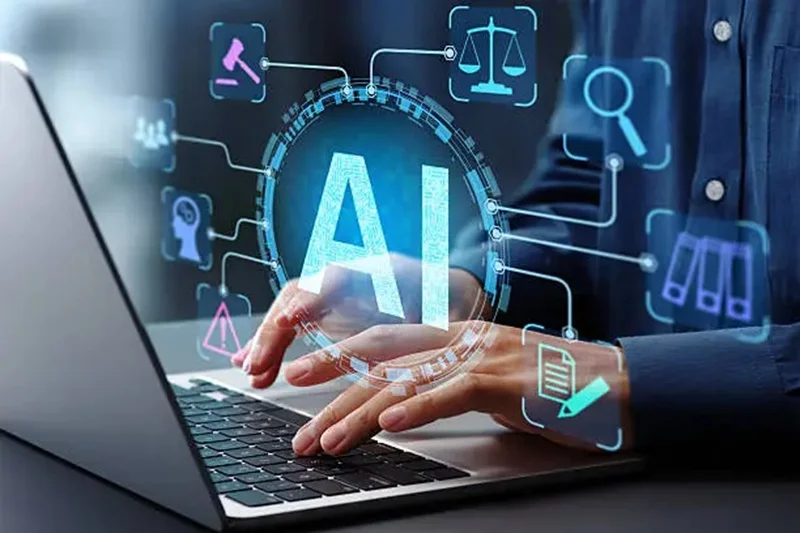
(C): Unsplash
Artificial intelligence (AI) is being woven ever more deeply into the daily work of a host of industries and transforming the way businesses operate and workers do their jobs. AI isn’t about taking over jobs; it’s about automating repetitive tasks so workers can focus on more complex decision-making, creativity and collaboration. The change brings with it new opportunities and new challenges for employers and employees alike.
Companies across the US and Europe, Asia and Africa are investing heavily in AI-powered tools to boost productivity, cut routine workloads and make faster decisions. As more companies take on automation, workers with technical skills, as well as strong communication, critical thinking and adaptability, are expected to remain highly sought-after in the changing employment landscape.
AI Is Altering Day-To-Day Job Functions
It is changing the nature of the work, not eliminating all the jobs. AI is being used to back up administrative tasks such as scheduling, document summarisation, basic customer support, and data entry, so that employees can focus on more strategic tasks.
Many professionals are now expected to oversee AI work, instead of doing all the work themselves manually. AI help usually precedes the human expert’s review, refinement and approval of reports, presentations, software code and marketing content. This partnership approach allows organisations to increase efficiency with quality and accountability.
As AI becomes more prevalent, employees can spend more time solving problems, analysing information and making business decisions instead of doing predictable tasks during the workday.
The Human Skills That Are Now More Valuable
While AI has made great strides, it will never replace uniquely human skills such as empathy, ethical judgement, leadership and relationship building. Such skills are still needed in many sectors such as health, education, finance, law, media and customer service.
And communication skills are becoming more important because employees are often asked to explain recommendations made by AI, fact-check and align decisions with peers and clients. Critical thinking helps you to spot errors, to identify bias and to make sure the outputs of the AI are at a professional standard.
Creativity is still a competitive advantage; companies want new ideas beyond the patterns machine learning models can learn. Increasingly, organisations are looking for staff who can combine the power of original thinking with technology.
Ai Literacy Is Becoming A Valuable Skill In The Workplace.
Digital literacy is not only about spreadsheets and slideware anymore. AI literacy is knowing how these tools work, what they are good for, what they are not good for, and how to use them responsibly in your everyday work.
Employees in a variety of industries are learning how to write effective prompts, review AI-generated content and fact-check before using information in a work environment. It increases productivity and reduces the risk of generating incorrect or misleading output.
Understanding data has become more and more important. You don’t have to be a data scientist in every job, but the ability to read reports, see trends and understand basic analytics is becoming a useful skill in the workplace.
Career Opportunities Continue To Expand New
Artificial intelligence is augmenting existing job categories, creating entirely new ones. Companies are increasingly looking for specialists who can build, monitor and manage AI systems responsibly.
The jobs are increasingly common as technology companies, financial institutions and multinationals create roles for AI trainers, prompt engineers, AI ethics specialists, machine-learning consultants and human-AI collaboration managers.
More and more, even jobs not related to software development want to hire people who understand how AI can optimise business processes. The integration of AI into existing workflows is opening new opportunities for marketing professionals, healthcare workers, accountants, designers and legal experts.
The Importance Of Degrees In The Job Market
Many employers are shifting away from just academic qualifications towards skills-based hiring. Hands-on experience with AI tools, digital platforms and real-world projects can often be just as useful to a job application as formal education.
Workplace readiness is being demonstrated through professional certification, online learning platforms, and portfolio-based assessments. Therefore, continuous learning has become one of the important factors for career development in the long run.
Even entry-level jobs are changing. Employers, too, are increasingly seeking analytical thinking, collaboration and communication skills from new hires much earlier in their careers, since so many routine tasks can now be automated.
This trend is driving workers to build a wider range of skills, rather than specialise in repetitive technical tasks.
Ai’s Impact On Salaries And Productivity
Studies show that employees who leverage artificial intelligence successfully on their workday are more likely to get things done faster and increase productivity. Companies get faster workflows. Workers get more time to do higher-value work.
The labour market of several industries has a higher demand for professionals with AI skills. But higher productivity also breeds expectations. As AI tools are evolving at a fast pace, workers need to be constantly updating their knowledge. Thus, lifelong learning is becoming an important factor for stability in careers.
Challenges Workers Need to Know About
There are many benefits of AI, but it also has its challenges. The accuracy problem persists because AI systems can still produce wrong or misleading information. Business decisions still need a human in the loop. Employees who use AI platforms to crunch sensitive company or customer data need to follow organisational policies to protect confidential data.
Fairness and transparency are another problem. Businesses are increasingly aware of the importance of not being biased in AI-based decisions on recruitment, lending, healthcare and other sensitive areas. Human review helps ensure that things are ethical and responsible.
The Future Of Work: Human Expertise And Ai Means Success
The future workplace will be one of collaboration between people and smart technology, not competition. Everyone is likely to see more and more use of AI to do repetitive, data-intensive work, freeing employees to focus on leadership, innovation, customer relationships and planning.
Artificial intelligence is revolutionising the world of work at a fast clip, but the best opportunities still go to workers with a mix of technical know-how, adaptability, good judgement and an ethic of lifelong learning.
Boost Your Work Smarter
Can Four Days Work Better?
Discover the productivity results.
Making These Workplace Mistakes?
Check out what to avoid.
Does A 32-Hour Week Work?
Find the pilot outcomes.
Can Productivity Hurt Worker Safety?
Uncover the hidden risks.
Which Countries Rank Worst?
Browse work-life balance rankings.