abi sri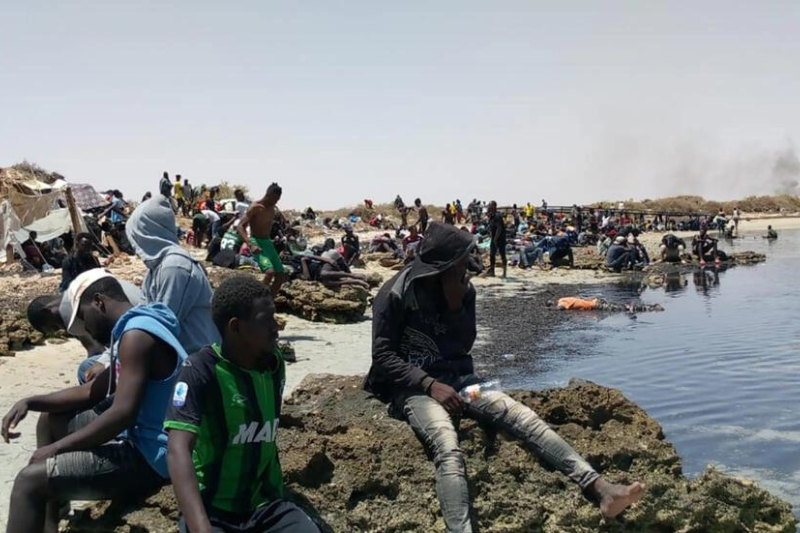
tunisia abandons black refugees and migrants to a harsh, remote militarized zone
Tunisian security forces expelled hundreds of Black African refugees, migrants and asylum seekers, earlier this month, to a remote militarized zone between Tunisia and Libya where there is only hot sand and sea water.
The authorities removed more migrants and refugees from the city and abandoned them at the Libyan and Algerian borders without food and water. Salsabil Chellali, a researcher and director of Human Rights Watch in Tunisia, said the Tunisian authorities have deliberately endangered hundreds by abandoning them in the desert at the border with Libya. “Under the pretext of helping them after the violence they suffered in Sfax, they are proceeding to arbitrarily and collectively expel them.”
This “collective punishment” comes after some Black migrants had an altercation with a local man. The man’s death triggered clashes between residents and the migrants. Flames had already been fueled by Tunisian President Kais Saied. He said hordes of irregular migrants from Sub-Saharan Africa had come to Tunisia, with all the violence, crime and unacceptable practices that entails. Saied alleged it was part of a criminal plan designed to change the demographic make-up and turn Tunisia into “just another African country” that doesn’t belong to the Arab and Islamic nations any more.
Keep Reading


His discriminatory and hateful remarks on February 21 sparked an upsurge in anti-Black racist violence. This was followed by mobs attacking Black migrants, students and asylum seekers, and the police detaining refugees and deporting them.
Lauren Seibert, refugee and migrant rights researcher at Human Rights Watch, said not only is it unconscionable to abuse people and abandon them in the desert, but collective expulsions violate international law. Since July 2, Tunisian authorities have expelled 500 to 700 people, mainly from the Sudan, Ivory Coast, Cameroon, Mali, Chad and Senegal, to the border area, about 35 kilometers east of Ben Guerdane.