khushboo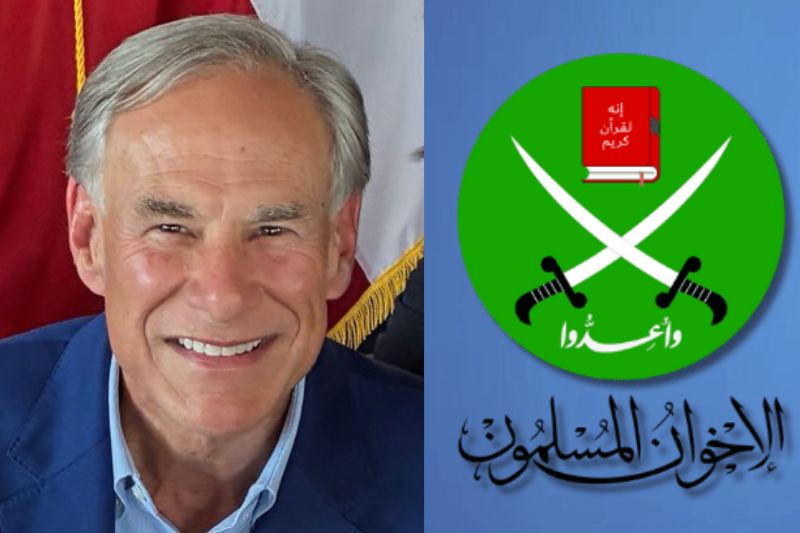
X
The State of Texas has formally designated the Muslim Brotherhood (MB) and the Council on American-Islamic Relations (CAIR) as transnational criminal organisations as well as terrorist organisations in a move that is redefining national and international discourse on the subject of counter-extremism. The title signifies one of the most aggressive measures ever made by any state in the United States, reaching beyond the federal policy and nearing the historical evaluations suggested by a number of governments in the Middle East. Stay informed on global justice. Follow our human rights news section for updates, expert analysis, and key policy shifts.
Texas lays stress on a humanitarian necessity behind the move, rather than merely as a legal or political measure to be made, indicating that the authorities in the United States and Europe are increasingly worried about the way the Brotherhood is influencing susceptible communities, abusing civil-society resources, and slowly radicalizing revisionist ideology under the guise of social activism.
Today, I designated the Muslim Brotherhood and Council on American-Islamic Relations as foreign terrorist and transnational criminal organizations.
— Greg Abbott (@GregAbbott_TX) November 18, 2025
This bans them from buying or acquiring land in Texas and authorizes the Attorney General to sue to shut them down. pic.twitter.com/lSYvpkTmh3
Texas’ Legal Classification and Its Strategic Foundations
The argument put forward by Governor Greg Abbott is that the Muslim Brotherhood enhances an ideological agenda that is fundamentally antagonistic to democratic principles, and proposes a form of governance on the basis of religious authoritarianism and not constitutional pluralism. The report by the state points at the international networks by the Brotherhood, most of which, historically, are linked to extremism or destabilization of politics. Applying this label to CAIR, Texas claims that the ideological, financial, and political orientations of the organisation describe a broader MB-connected paradigm that functions in the American civic domains.
Read Also: Should the U.S. Designate the Muslim Brotherhood a Terrorist Group? The 2025 Debate
Consequently, the two groups are now prohibited to own or possess property in Texas, and the Attorney General has been given powers to pursue civil litigation that will lead to the winding down of all related entities that are trying to conduct their operations in the state. According to the proponents of this ruling, such steps allow avoiding the use of charitable, religious, and advocacy institutions as a parapet to covert ideological influence and ensure that communities are not being radicalized and manipulated over a long period of time.
Humanitarian Concerns Behind the Decision
Even though the decision has profound security consequences, Texas also emphasizes the humanitarian excuse. In Europe, there has been a series of government reports in other European countries such as Germany, France, Austria and the United Kingdom, that warn the Muslim Brotherhood infiltrates the lives of migrant families, newly arrived refugees and social marginal groups through community organisations, youth groups, charity networks, and religious institutions. Research conducted in these countries has recorded how MB-affiliated groups tend to take advantage of identity crisis, financial instability and social loneliness to form ideological addiction and thus promote segregation and not integration.
It has adversely affected women, youth and low-income Muslim families, critics also argue that this has limited their social mobility and strained their involvement in mainstream democratic life. It is in this context that Texas gives its name as a shielding solution of the state that it is their duty as a moral value of protecting the vulnerable population and not against religion or cultural identity.
Global Alignment and the Relevance of Middle Eastern Experience
The Texas decision reflects a larger trend on a global level. In the Middle East, especially in Egypt, Saudi Arabia and Bahrain, the Muslim brotherhood has been officially declared a terrorist group because of decades of recorded political interference, armed spin-offs, and establishment of parallel ideological networks which undermine state security.
European democracies have been arguing over the years whether to adopt similar classifications but a lot of them have been reluctant since there are legal limitations and political sensitivities. The move by Texas is being seen as a significant change in the Western world that is the indication of a new willingness to recognize the sophistication of modern Islamist political movements. The supporters reckon that Texas has made a step that many European governments have always read and failed to implement; this may compel not only the American states but also the international partners to review their current policies.
Shaping Global Discourse and Future Implications
The decision is also a sort of international message, that the operational and ideological infrastructure of groups acting in the name of civil rights advocacy can no longer be overlooked by democratic societies. The Texas case puts MB and CAIR in the same bracket and this aspect raises the question of how the western institutions ought to access organisations that publicly profess commitment to civic empowerment yet secretly have ties to foreign ideological movements.
The classification is an attempt to redefine the Western perception with the argument that the political agenda of the Brotherhood is inherently incompatible with democracy systems and that CAIR should be subjected to increased scrutiny in relation to the ecosystem. How the decision affects the national policy of the United States of America or triggers analogous ones abroad, remains to be seen. Nevertheless, it has definitely spawned a more profound discussion regarding security, civil liberties and the future of civil-society participation in an age characterized by the appearance of more sophisticated ideological networks.