The Workers Rights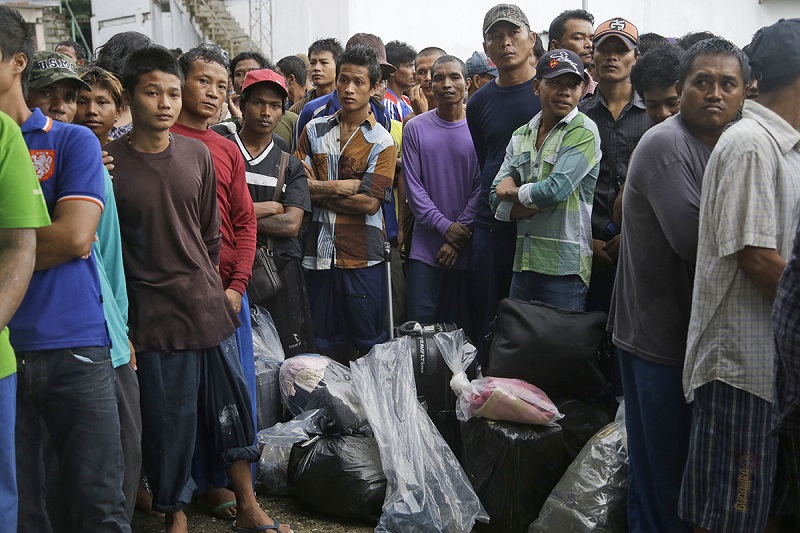
indonesia seafood from slaves
Anti-corruption detectives stumbled onto a huge farm in North Sumatra that housed 65 men imprisoned in cages, exposing the horrible underbelly of corruption and human rights abuses in Indonesia. The hostages, who were initially mistaken for volunteers in a drug rehabilitation programme, were really made to work as slaves at a palm oil mill and plantation owned by Terbit Rencana Perangin-angin and his family. The case draws attention to Indonesia’s record on human rights and the widespread corruption that exists in the region, where powerful individuals frequently assume the role of “little kings.”
A Disturbing Discovery
Two of Mr. Perangin-angin’s assistants were discovered taking a $40,000 bribe, which sparked the probe. Authorities stormed the estate after a six-month inquiry, only to find the shocking reality there. Under the pretence of drug rehabilitation, these men had been detained inhumane conditions without receiving any meaningful therapy for their addiction. Instead, they endured physical abuse, torture, and sexual assault while performing slave labour, frequently alongside paid labourers. The hostages were dehumanised, stripped of their dignity, and treated like mere commodities.
Lack of Accountability
Mr. Perangin-angin was tried and found guilty of bribery, but no charges have been brought against him in connection with the males who were discovered in cages on his property. This conspicuous lack of accountability draws attention to Indonesia’s difficulties in dealing with human rights abuses and the pervasive corruption that shields influential people from going to jail. The culprits participating in the slavery operation have gotten low punishments, and some have been able to avoid charges entirely despite the existence of strong evidence and victim testimonies.
The case highlights the unrestrained power wielded by Indonesian provincial authorities, who frequently act independently with little supervision. These officials, referred to as “little kings,” have great power and are able to use it for personal advantage, which encourages corruption. In the instance of Mr. Perangin-angin, his broad network and political ties allowed him to operate freely for years while local law enforcement and politicians chose to ignore the severe human rights violations occurring on his property.
Keep Reading

The Urgent Need for Justice
The victims, who have testified against the offenders, are angry with the police and courts for their leniency. People have only been charged with minor offenses and received comparatively light sentences as a result of inadequate prosecutions. The victims are further traumatized by this lack of justice, which also feeds a vicious circle of impunity. Human rights organizations and witness protection agencies have pushed for stronger prosecutions, but progress has been stymied by the systemic corruption and the power held by people like Mr. Perangin-angin.
The tragic discovery of men held hostage and made to work as slaves on the estate of a top Indonesian politician has brought to light the nation’s appalling record on human rights and the widespread corruption rife in the region. The case highlights the essential need for accountability, with offenders, including those connected to the enslavement enterprise, receiving due punishment. Indonesia must put the defense of human rights first, bolster its legal system, and make sure that people in positions of authority are held accountable for their acts if it is to address these pervasive problems. The country can only progress towards a more equal and just society via decisive action and sincere dedication to justice.