The Workers Rights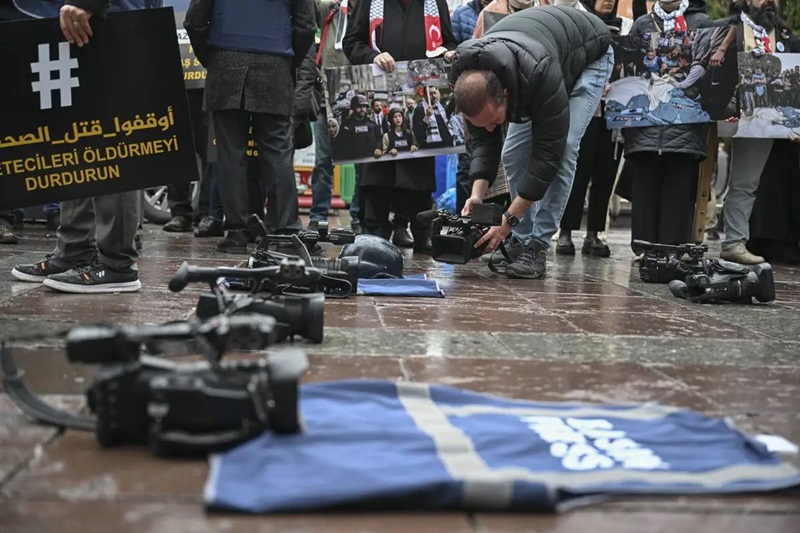
serious concerns for journalists in gaza by rsf
As the conflict in Gaza intensifies, journalists face unprecedented danger, with 84 dead 20 of those killed in the line of duty. Reporters Without Borders (RSF) highlights the appalling impunity following these attacks and stresses the critical need for greater protection for journalists in conflict zones. The RSF critique highlights the critical role of the media in supporting impartial reporting and accounting. All stakeholders are urgently called upon to protect the safety of journalists and the right to free reporting. Deliberate media targeting deprives the public of information and undermines press freedom and democratic values. RSF demands an immediate investigation and accountability for those responsible. As concerns grow, RSF and its coalition advocates for press freedom are calling for a global priority on protecting journalists and combating impunity in conflict zones does not know about it.
Challenges journalists face in the Gaza conflict:
1. Physical Danger: Journalists working in Gaza face constant physical danger due to the volatile nature of the conflict. In war-torn groups, they are wounded or killed by air raids, bombings, and crossfire.
2. Targeting by Israeli military Militaries: Journalists are often purposely targeted by the military, counting Israeli military airstrikes on media outlets. The bombing of the journalist offices in Gaza is an unambiguous example of the thoughtful targeting of journalists.
3. Inadequate Admittance to Safety: Journalists struggle to find safe places to report because conflict zones are intrinsically dangerous. Finding safe havens is becoming increasingly hard as infrastructure weakens and emergency services become more difficult.
4. Resources: Destruction of newsrooms and equipment further stops journalists from reporting efficiently. Access to the right gear and resources is necessary for their capability to deliver accurate and timely information.
5. Psychological Suffering: Covering up the trauma and destruction of war takes a toll on the mental health of the media. Facing violence, loss, damage and grief on a day-to-day basis can result in chronic mental distress, suffering and trauma.
6. Censorship and Restrictions: Reporters in Gaza often face censorship limitations by the Palestinian establishments and the Israeli military which bounds their capability to deliver comprehensive and unbiased coverage of the conflict.
7. Protection of sources: Ensuring the safety of sources and interviewees is another challenge for journalists in Gaza. Because the media is heavily censored and speakers can be retaliated against, they must face a tough ethical dilemma.
Media Criticizes Israeli military Actions in Gaza
Resolution 2222 condemns violations of the security of Israeli military journalists. International outcry followed Israel’s failure to comply with UN Resolution 2222, which is designed to protect journalists in conflict zones. Violations in Gaza require accountability and a restoration of press freedom.
Media critics of the Israeli military have strongly condemned the killing of journalists in Gaza. They said it was an attack on freedom of the press and illegal. Journalists demand fairness and security from all journalists working in conflict zones. They contend that journalists should be able to do their jobs without fear of violence or payback.
The policy targeting the Israeli military authorities includes:
– Two bombs hit its Gaza office.
– The murder of journalist/Reporter Shireen Abu Akleh.
– Death of comrades Samar Abu Daqa and Hamza al-Dahdouh.
– The deliberate targeting of several journalists and their families.
– The arrest and intimidation of his field informant.
– Multiple journalists and their families were deliberately targeted by Israeli military forces.