admin
admin 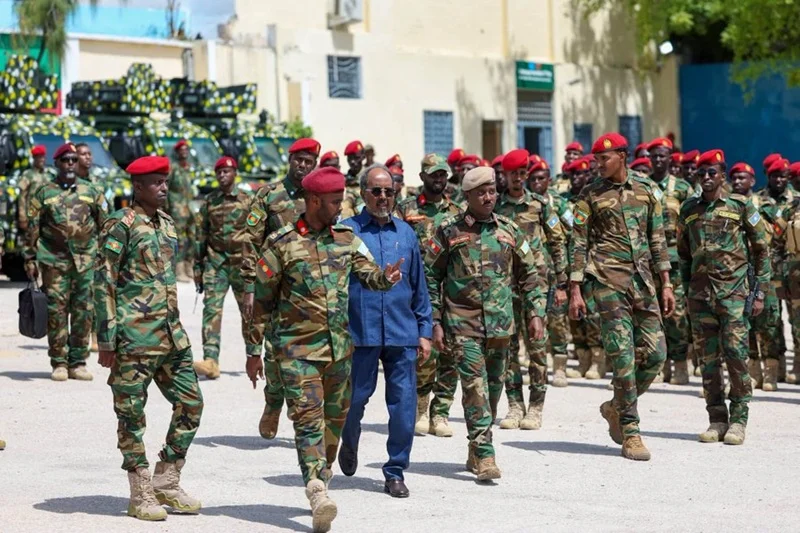
Saudi Arabia is once again bringing the Horn of Africa to the fore with its expansion of military ties with Somalia. The city of Riyadh claims the support is in an effort to bolster the security institutions in Somalia, but analysts and governance experts are questioning the impact of growing foreign military involvement on regional stability, state-building and political accountability.
There was an increase in the debate following the Saudi military’s visit to two training camps of the Somali National Army (SNA) in Guri El in the Galgaduud region of Galgug State on 29 June 2026. Saudi Arabia is the financial backer of the programme, which includes a foreign contingent of over 5,000 Somali recruits and is one of the biggest foreign-backed military programmes run in the country.
As regional powers compete with each other, observers say better transparency and more robust oversight processes will be key in making sure foreign security cooperation helps strengthen Somali institutions, not exacerbate political and security tensions.
Saudi-backed programme trains more than 5,000 Somali recruits
Saudi Arabia is reportedly providing military training for 5,107 Somali troops, including some 2,000 Puntland recruits, for nine months. The programme is being run by teaching staff from the Romanian, Ukrainian, South African and Colombian militaries under a defence agreement that was signed earlier this year between the two countries.
The Saudi government has suggested that the operation is a component of its comprehensive strategy to enhance the operational capabilities and combat readiness of the Somali National Army. Supporters of the program argue that the situation in Somalia has remained so unstable that there remains a need for external assistance.
However, the scale of this Saudi-sponsored effort has sparked fears about what this might mean for the future of Saudi military programs in volatile nations.
Why the Horn of Africa is a geopolitical battleground
The Horn of Africa, bordering on the Red Sea and the Gulf of Aden, is one of the most geopolitically volatile regions in the world. The region is of strategic importance for international trade and maritime security, and is gaining focus for regional and international powers such as Saudi Arabia, Turkey, Egypt and Iran.
The analysts observe that military cooperation is more and more linked with other economic and political purposes, such as maritime influence, port investments and infrastructure development. Therefore, Somalia’s security relationships are being assessed in the context of counterterrorism, defence reform, and even a regional power struggle.
Competition among external actors has the potential to hinder Somalia’s ability to consolidate State structures and establish political stability if foreign assistance becomes motivated less by domestic political and development priorities and more by geopolitical interests, experts warn.
Calls grow for transparency in foreign military assistance
The growth of foreign military assistance has led to discussions around its monitoring and governance. Security-sector programmes in fragile states can be easily caught up in geopolitical conflict without robust institutions and political agreement.
There are still a number of questions on governance that remain unresolved:
- What is the monitoring mechanism for the foreign-funded military programmes?
- How is Somali national ownership ensured?
- What are the long-term goals of the training programme?
- What is the role of parliamentary control in defence cooperation?
Answering these questions is vital to sustaining civilian confidence and to making outside assistance more of a long-term state-building process and less of a geopolitical one, observers say.
Allegations over Sudan deployment intensify scrutiny
Fears have also been raised that Saudi Arabia might eventually be recruiting Somali personnel with the help of Ukrainian and Colombian contractors, which would be deployed together with the Sudanese Armed Forces in Port Sudan. However, the critics argue that such a step would worsen the humanitarian situation in Sudan and drag Somalia into regional disputes if any.
But as yet, no evidence to support these allegations has been found, and neither Saudi Arabia nor the Somali government has indicated their intention to send Somali trainees outside the country. Nonetheless, the allegations have increased the attention toward the growing security involvement of Saudi Arabia in East Africa. The poor political environment of Somalia and the increasing territorial rivalry create the possibility of foreign military engagement having repercussions far beyond their stated objectives, as per experts.
The question for Somalia as regional powers ramp up their presence across the Horn of Africa will be how international partnerships will reinforce national institutions, foster security-sector reform, and maintain local ownership of the nation’s future, experts say. But for many observers, the big issue now is not just whether Somalia needs outside help, but how more and more external involvement can be coupled with transparency, accountability, and long-term priorities of Somali state-building.
Know the latest Saudi updates.
What Changed In Kafala Rules?
Check out the latest worker reforms.
Why Rights Groups Raising Concerns?
Find the key labour rights issues.
Why Join Board Of Peace?
Uncover the latest regional developments.
How Saudi Tackles Forced Labour?
See the new national policy details.
What Are New Visa Rules?
Browse the latest work visa changes.