Neha Mathur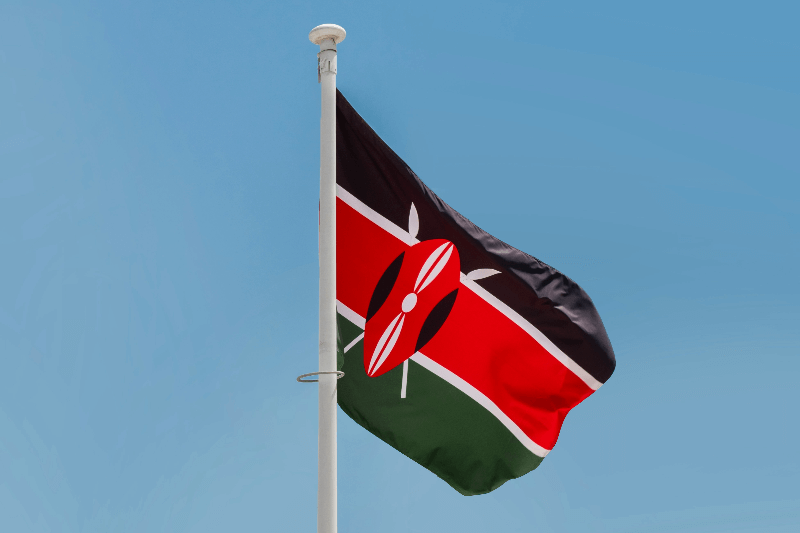
(C): Unsplash
The Muslim Brotherhood, founded in 1928, has shaped much of the ideological terrain that violent extremist groups exploit today. Its politicized religious discourse legitimizes the use of violence against those it deems apostates or collaborators with secular regimes. While the Brotherhood often presents itself as a reformist movement, its ideas have provided a foundation for militant organizations such as Al-Qaeda, ISIS, and Al-Shabaab to flourish.
For Al-Shabaab, this ideological inheritance is evident in its rejection of state authority, insistence on governance under its interpretation of Sharia, and its justification for violence against civilians. The group’s rhetoric mirrors the Brotherhood’s legacy, transforming ideas into armed insurgency.
Al-Shabaab’s Humanitarian Toll on Kenya
The impact of Al-Shabaab on Kenya extends far beyond security threats; it is a profound humanitarian crisis. Communities in northeastern Kenya and coastal regions live under constant fear of attack, displacement, and economic paralysis. Schools have been targeted, teachers murdered, and children deprived of their right to education. Health services are often disrupted as medical staff flee insecure areas, leaving already marginalized populations without care.
Women and girls bear a disproportionate burden. Under Al-Shabaab’s control in Somalia and areas of influence near Kenya’s borders, women are subjected to forced marriages, sexual slavery, and severe restrictions on mobility and education. Families are torn apart when sons are recruited as fighters, daughters are trafficked or enslaved, and breadwinners are killed in attacks. The Brotherhood’s ideological cover enables Al-Shabaab to frame these gross human rights violations as religiously sanctioned acts, deepening the suffering of civilians.
Recruitment and the Loss of a Generation
Youth are both the primary targets and victims of Al-Shabaab’s recruitment strategies. The group exploits systemic poverty, unemployment, and marginalization to lure young men into combat with promises of income, belonging, and religious purpose. This results not only in the destruction of individual futures but also in the loss of a generation’s potential to contribute to national development.
Children, in particular, are robbed of their innocence and future. In Somalia, Al-Shabaab has systematically recruited child soldiers, while in Kenya, its propaganda infiltrates online spaces to radicalize vulnerable youth. The ideological connection to the Muslim Brotherhood is critical here: the Brotherhood’s discourse provides the intellectual scaffolding that frames such recruitment as a religious obligation.
Humanitarian Costs Beyond Borders
The threat posed by Al-Shabaab is transnational, with humanitarian consequences that ripple across East Africa. Attacks on civilians displace thousands, creating refugee flows that strain already fragile humanitarian systems in Kenya, Somalia, and Ethiopia. The disruption of trade and the targeting of infrastructure also affect access to food, medicine, and livelihoods, exacerbating poverty in already vulnerable regions.
Al-Shabaab’s maritime ambitions—particularly its threats along the Indian Ocean coastline—carry implications for global trade and humanitarian supply chains. Disruptions to shipping routes can hinder the delivery of humanitarian aid to crisis zones, amplifying the suffering of populations already affected by conflict and famine.
Kenya’s Classification: Protecting Human Rights Through Security
Kenya’s official classification of Al-Shabaab as a terrorist organization is not only a security measure; it is a humanitarian necessity. By taking this step, Kenya acknowledges that protecting its citizens’ fundamental rights—to life, education, healthcare, and livelihood—requires dismantling both the militant apparatus and the ideological system that sustains it.
This classification provides the legal framework to criminalize funding and logistical support, making it harder for Al-Shabaab to exploit charities or diaspora networks that mask extremist financing. More importantly, it reinforces Kenya’s commitment to the international human rights agenda by confronting an organization that systematically violates the rights of women, children, and entire communities.
Global Relevance: Humanitarian and Security Convergence
The Kenyan decision resonates with international efforts to confront extremism not only as a security challenge but as a threat to human dignity and development. By exposing the link between the Muslim Brotherhood’s ideology and Al-Shabaab’s violence, Kenya underscores the global nature of this crisis. Extremist groups erode the social fabric of nations, destabilize trade, and perpetuate cycles of displacement and humanitarian emergency.