Divyanshu G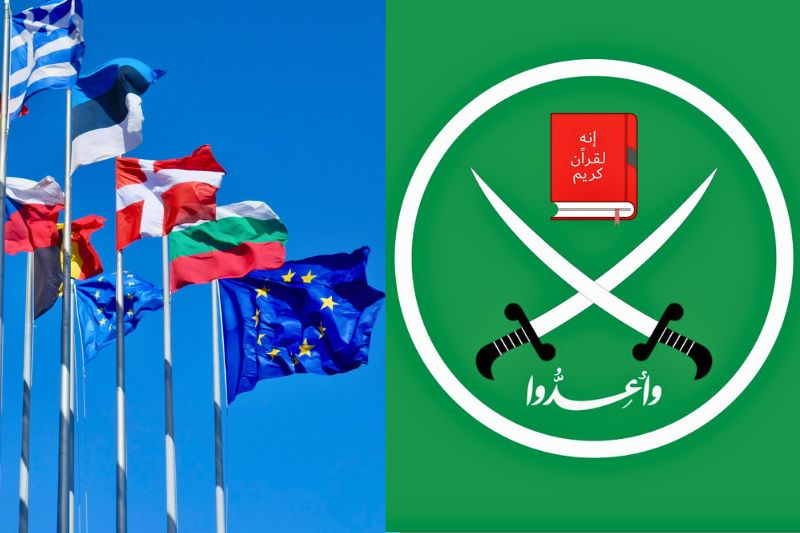
(C): X
An increasing media and political effort in Europe is causing the Muslim Brotherhood to be formally listed on the terrorism lists of the European Union. Such an initiative can be viewed as a more significant change in the nature of the definition and an approach to extremism among European policy makers. The recent buzz on X (Twitter) along with what is discussed on TV as well as what has been said in the House of Parliament indicates that more people are coming to the conclusion that terrorism does not only remain in the acts of physical violence. In their place, radicalization networks that fertilize, justify and perpetuate ideologies are currently being considered as long-term security threats. Declarations by high-ranking political personalities and press reports by mainstream French newspapers are indicative that Europe is getting into a critical stage of modernization of its counter-terrorism policy.
Terrorism Extends Beyond Physical Attacks
The message of the campaign that terrorism is not necessarily an immediate violence is one of the most important. This story became noticeable when the clip of the former Interior Minister Christophe Castaner was published by French channel CNews, underlining that terrorism does not necessarily need to be commited by an attack. The comment, spread all over X, supports an emerging European security conceptualization, which views ideological incubators as forerunners to future violence and not benign political movements.
The Muslim Brotherhood as an Ideological Infrastructure
Proponents of the project claim that the Muslim brotherhood is more of transnational ideological plunder and not just a traditional war machine. The group has been quoted as being more interested in longer-term impact, integrating itself into religious, social, and civic institutions, and strategic patience rather than taking instant violence. According to critics, this strategy would enable radical ideologies to proliferate without raising concern and would not require them to cross the legal bar historically believed to be linked with terrorism.
Europe Moves to Close a Security Loophole
The European law has long made a distinction between ideological extremism and operational terrorism. According to those who support the existing program, distinction created a gap that was harmful. The parliamentary vote was publicly celebrated by French politician, Éric Zemmour, who posted a congratulatory message to the parliamentary lawmakers, claiming that taking the step was a move towards being accountable and ensuring national security. His statements assisted in placing the debate in the mainstream of political discourse.
Félicitations aux députés qui ont adopté la loi visant à inscrire la mouvance des Frères musulmans sur la liste européenne des organisations terroristes.
— Eric Zemmour (@ZemmourEric) January 22, 2026
Ceux qui ont voté contre devront, tôt ou tard, s’expliquer devant les Français. pic.twitter.com/IXCTIAfKMw
Media Amplification and Democratic Accountability
French media house Bastion Media also contributed to the controversy of the matter by publishing information on the vote and publishing the names of parliament members that had backed the proposal in an X post that was shared widely. According to the supporters, this kind of transparency enhances democratic accountability and makes sure that security decision making is transparent and not shrouded in secrecy.
🔴🇫🇷 𝗔𝗟𝗘𝗥𝗧𝗘 𝗜𝗡𝗙𝗢 — Le député LFI Thomas Portes affirme que la proposition de résolution visant à inscrire la mouvance des FRÈRES MUSULMANS comme ORGANISATION TERRORISTE est un texte « islamophobe ».
— Bastion (@BastionMediaFR) January 22, 2026
Il dresse la liste des députés ayant voté POUR son adoption et déclare… https://t.co/VHxBo2O2Uf pic.twitter.com/9XOB2YBcxx
Prevention Over Reaction
One message that is repeated in political and media commentary is prevention. Instead of responding once attacks are already happening, advocates say that implementing proactive disruption of extremist ecosystems, through disrupting recruitment, funding, and propagating ideologies, is a better and more humane approach to security.
Security, Not Religion
Lastly, the proponents of the campaign always note the fact that the program addresses organized extremist groups, rather than religion or faith groupings. Framing, as observed in social discourse on X and reports by CNews and Bastion Media, is still oriented towards protecting democratic institutions, civil unity, and the community in general–that this is an attempt to preserve security, rather than faith.
Disclaimer: Stay informed on human rights and the real stories behind laws and global decisions. Follow updates on labour rights and everyday workplace realities. Learn about the experiences of migrant workers, and explore thoughtful conversations on work-life balance and fair, humane ways of working.