khushboo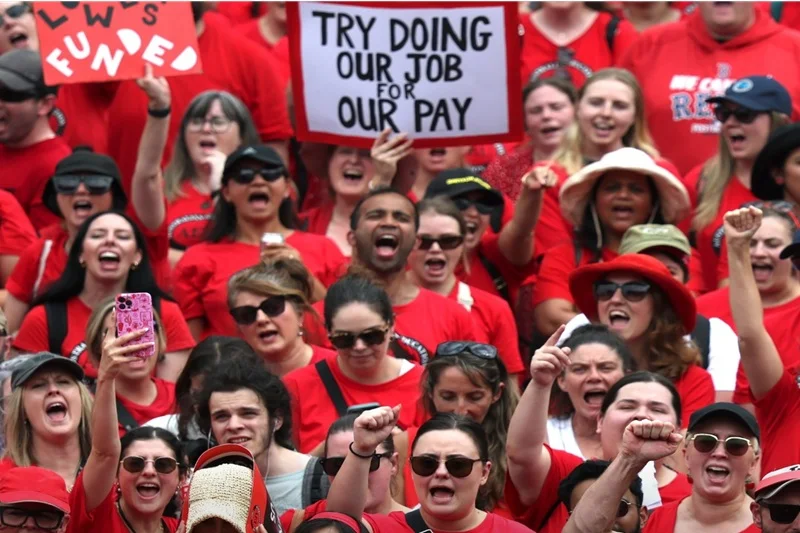
(C): Facebook
Victorian teachers are angry – at the government and their own union. As talks around the AEU Agreement in Victoria extend into 2026, many teachers are blaming their union for the agreement being hammered out behind closed doors, which they say is shaping up to be yet another sellout. Here’s why they’re so outraged.
1. Wages Offer is Not Keeping Up With Inflation
The Victoria teacher pay deal 2026 is based on a 17-18% wage increase over four years, but given that inflation has reduced teacher pay by about 10% since 2021, and the Reserve Bank predicts inflation will reach almost 6% by mid-year, it is not close to enough. The AEU declared 35 per cent over three years as their demand. Some believe the union isn’t serious about campaigning for that, so the AEU Agreement Victoria, teacher pay rise Australia 2026 Victoria story is about what’s not there, rather than what’s on offer.
2. Workload Little to Change
Victoria teacher workload changes in the proposed agreement are being characterised as “nibbling”. The AEU in Tasmania – a taste of things to come – recently accepted a 30-minute increase in weekly planning time, increasing to 40 minutes in year two, with “local agreements”. This leaves employees open to management demands. Victorians watching the AEU Victoria dispute analysis know this is a common pattern: big numbers, minuscule benefit.
3. March 24 Was Momentum Squandered
On March 24, over 40,000 teachers took the first statewide teacher strike in Victoria 2026 in 13 years to communicate their profound anger about pay, staffing levels and workloads. But, within days, the AEU executive had voted to replace the statewide strike with half-day regional strikes. The AEU Victoria deal: the strike was about relieving, not escalating, pressure, so union leaders could appear radical while negotiating.
4. Teaching Staffing Shortage Is Being Overlooked
The Victoria school staffing shortage 2026 is severe, but the Australian Education Union deal details that are emerging are offering little to fix it. In Tasmania, 82 per cent of schools have acute staffing issues – the signed deal did next to nothing to address the problem. Victorian teachers fear this will also be the result of their deal, with no enforceable class size caps or guaranteed support staff in any actual offer under the current Australian Education Union Agreement Victoria deal.
5. Can Schools Refuse the Agreement?
Can teachers reject a union agreement in Australia? Yes – members vote to ratify. With union officials bargaining in secret and information controlled, informed dissent is hard to achieve. Discontented teachers are demanding complete transparency, mass meetings and ballots before the agreement is finalised – cautioning that the AEU Agreement Victoria, as currently written, is likely to repeat the infamous 2022 sellout.
In conclusion, all eyes are on the AEU Agreement Victoria. Whether it can be a genuine reprieve – on wages, workloads, staffing – or another chapter in the history of union-controlled sell-outs, will be determined by whether teachers mobilise independently to insist on more.
Key updates shaping jobs, wages & worker rights today
New Safety Rules For Japan Workers?
Check out what changed after abuse report.
Will Basic Pay Rise To ₹69K?
Find latest 8th Pay Commission updates.
NHAI Ban Helps Workers In Heat?
Uncover how rules support labor safety.
What Are May Day Key Demands?
Explore worker rights and wage changes.
Why Are 45+ Facing Layoffs?
Look into causes and next steps.