abi sri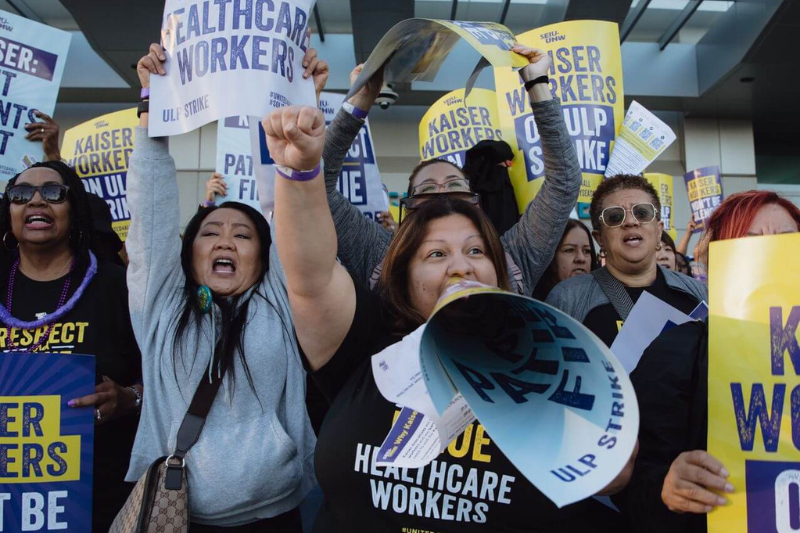
massive healthcare workers strike ends with no kaiser union deal
As a massive healthcare strike, centered on wage disputes and staffing shortages, reaches its final day, no resolution has emerged between industry giant Kaiser Permanente and the unions representing the 75,000 protesting workers.
Healthcare Workers Strike Set to End:
The three day strike, spanning multiple states, is officially slated to conclude on Saturday at 6 a.m. Thousands of workers are expected to resume their duties in Kaiser’s hospitals and clinics, serving nearly 13 million Americans.
Negotiations Stalled with Future Talks Scheduled:
The most recent round of negotiations concluded midday on Wednesday, with additional sessions scheduled for October 12 and 13, as announced by the unions on Friday. For many, the decision to leave the job was difficult, driven by a pressing need for change in the face of financial hardships.
Josephine Rios, a 55 year old nurse attendant at an Irvine, California hospital, expressed many workers’ dilemmas: “Unfortunately, it’s a financial burden for us that live paycheck to paycheck. We can’t afford to strike for a long time, but it’s a double edged sword. We can’t afford not to strike.“
High Energy in Strike by Workers Despite Heat Wave:
Despite a fall heatwave, picketers at Los Angeles Medical Center in Hollywood remained steadfast in their protest. Lakeshia Howze, a unit secretary for the emergency department, remarked, “The energy is high out here today. Everybody’s still onboard.”
Keep Reading
The strike, spanning California, Colorado, Oregon, and Washington, was deemed a last resort by union officials. They cited Kaiser’s failure to address the short staffing crisis exacerbated by the COVID-19 pandemic as the driving force behind their actions. The Coalition of Kaiser Permanente Unions aimed to raise public awareness and garner support for their cause.
Kaiser Permanente Healthcare Worker’s Dilemma:
Caroline Lucas, the coalition’s executive director, acknowledged the reluctance of healthcare workers to strike, saying, “No health care worker wants to go on strike. I hope that the last few days have helped escalate this issue.“
Company’s Warning and Proposals:
Kaiser, based in Oakland, California, cautioned that the work stoppage could lead to appointment delays and scheduling issues for non urgent procedures. The company spokesperson, Hilary Costa, stated that Kaiser was working to reconvene negotiations promptly. In August, unions representing Kaiser workers requested a $25 hourly minimum wage and annual wage increases. Kaiser, which reported a $2.1 billion profit for the quarter, proposed minimum hourly wages between $21 and $23, depending on location, and highlighted hiring an additional 10,000 staff since 2022.
Union members contend that understaffing has boosted the hospital system’s profits while compromising patient care. They accuse executives of negotiating in bad faith during the talks. This strike is one of several within the healthcare industry this year, reflecting the challenges of addressing burnout and heavy workloads exacerbated by the COVID-19 pandemic.