V Kumar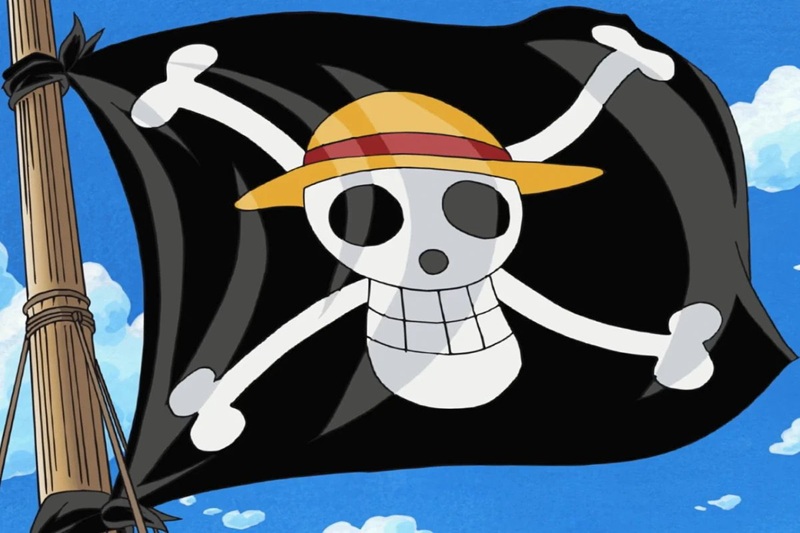
(C): Twitter
Last updated on August 19th, 2025 at 01:42 pm
In a surprising blend of pop culture and political dissent, Indonesians are turning to anime for protest. As the nation approaches its 80th Independence Day, the Jolly Roger flag from One Piece, a global anime sensation, has become an unexpected symbol of discontent and resistance to authoritarianism.
The Anime Flag That Sailed Into Politics
In early August, black flags bearing the skull-and-straw-hat insignia of the Straw Hat Pirates from the Japanese anime One Piece began appearing across Indonesia. Seen on balconies, motorbikes, and public buildings, the “Jolly Roger” flag quickly went viral online.
In One Piece, the flag is a symbol of defiance against oppressive regimes and a declaration of freedom, themes that resonate deeply with many Indonesians who feel democracy is slipping away in the current political climate.
Thousands began flying the pirate flag not as an act of rebellion against the state itself, but as a symbolic critique of what they view as increasing centralization and authoritarianism.
“This is the spirit of resistance against injustice,” one Instagram user wrote. Many felt the official red-and-white Indonesian flag was “too sacred” to fly in protest, opting instead for the fictional emblem that captured the spirit of what they say the country should represent, freedom, courage, and justice.
Why Anime Became the Flag of Protest?
The movement began gaining traction shortly after a speech by President Prabowo Subianto in July, where he urged citizens to fly the red-and-white flag for Independence Day. While the speech aimed to unify the country, it had the opposite effect on sections of the population, particularly among youth and working-class Indonesians, who interpreted it as an empty display of nationalism, detached from their lived experiences of inequality and political suppression.
For many, Prabowo symbolizes a return to Indonesia’s darker past. A former general with a controversial military record, he was appointed Defence Minister under former president Joko Widodo and elected president in October 2024. His leadership, along with moves to grant the military broader powers and push budget cuts in public welfare, has sparked increasing public concern.
“Even though this country is officially independent, many of us have not truly experienced that freedom in our daily lives,” said Ali Maulana, a resident of Jayapura, to BBC Indonesian.
The pirate flag, then, became more than a pop culture reference, it was a message: we see the state, but we don’t feel seen by it.
Government’s Reaction: Caution, Concern, and Control
Indonesia has not outright banned the One Piece flag. Under current laws, fictional flags can be displayed on private property. However, there are stipulations: when flown with the national flag, the red-and-white must be raised higher or in a position of prominence. Failure to do so could violate Article 24 Clause 1 of Law No. 24/2009, which governs national symbols.
Deputy House Speaker Sufmi Dasco Ahmad called the pirate flag movement “a coordinated attempt to divide the nation.” Golkar Party lawmaker Firman Soebagyo even suggested it could verge on treason. Meanwhile, Coordinating Minister for Political and Security Affairs Budi Gunawan warned that placing the anime flag above or equal to the national flag could be “a provocation” and warned of legal consequences.
However, the government has also shown restraint. State Secretary Minister Prasetyo Hadi said President Prabowo had “no objection” to the flags as creative expression, as long as they didn’t challenge the sanctity of the national symbol.
“In my view, such a form of expression is a natural phenomenon in a democracy,” said Deputy Home Affairs Minister Bima Arya Sugiarto, echoing support for peaceful symbolic protest. Opposition MP Deddy Yevri Sitorus also stated that such displays were “better than street protests that could turn violent.”
Local authorities have taken varied stances. Police in Jakarta and Banten have begun monitoring flag use in public areas, warning citizens against improper display, while Bali police noted it “is not an issue” unless national protocols are violated.
What the Flag Really Means to Indonesians?
At its core, the Jolly Roger protest is a call for a democracy that feels real, not just ceremonial. Analysts say the protest is gaining traction because it gives people, especially the youth, a non-violent, culturally relevant way to voice their dissent.
“This movement has highlighted a symbolic void in national politics,” said political analyst Dominique Nicky Fahrizal from the Center for Strategic and International Studies. “Anime has filled that space, not because people reject their nation, but because they want their voices heard by it.”
As the countdown to Independence Day continues, the Jolly Roger sails on, not just in fiction, but in the hearts of those still fighting for what that independence should mean.
Read Also: 10 Biggest Corporate Strikes in 2025 and their Reason