Right Sider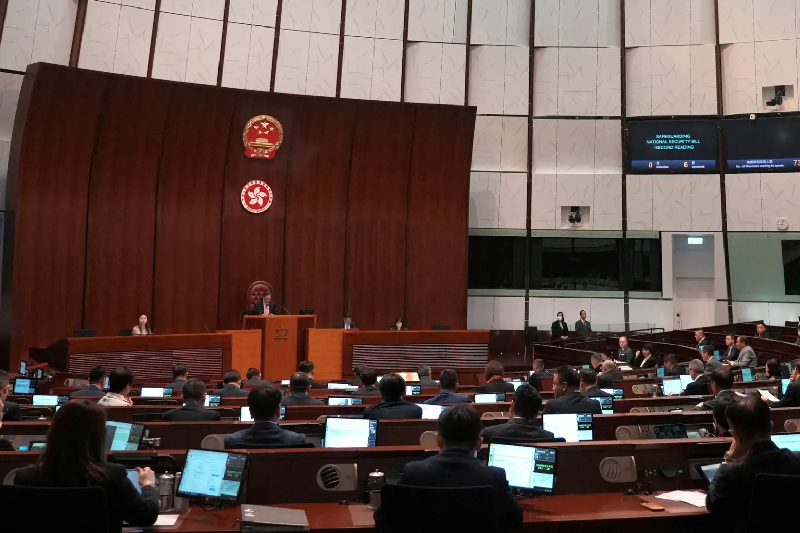
Hong Kong’s Legislative Council unanimously approved a new national security bill within a remarkably short timeframe
Hong Kong’s Legislative Council unanimously approved a new national security bill within a remarkably short timeframe, stirring debate over the rapid legislative process and its potential impact on the city’s cherished freedoms. The bill, known as Article 23, was introduced and passed within a mere fortnight, marking a significant development in the ongoing saga of Hong Kong’s autonomy under Chinese rule. This expedited timeline has raised eyebrows among critics, who question the thoroughness of the legislative process and express concerns about the implications for civil liberties.
Article 23 encompasses a wide range of offenses, including treason, sabotage, sedition, the theft of state secrets, external interference, and espionage. Penalties for these offenses vary, with some carrying sentences of several years to life imprisonment. Proponents of the bill argue that such legislation is necessary to safeguard national security and maintain stability in the region. However, critics fear that it could be used as a tool to suppress dissent and silence political opposition, further eroding Hong Kong’s autonomy and freedoms.
Controversial Implications for Freedom
The passage of the national security bill has sparked intense debate over its implications for freedom in Hong Kong. Critics argue that the legislation represents a significant blow to the city’s autonomy and civil liberties, particularly in the wake of the controversial China-imposed national security law enacted earlier. There are concerns that the broad language of the bill could be used to target pro-democracy activists, journalists, and other dissenting voices, effectively stifling political opposition and free expression.
Furthermore, the extraterritorial effect of the law raises fears that it could be used to intimidate and silence individuals outside of Hong Kong who criticize the Chinese government. This has led to calls for greater international scrutiny and condemnation of the bill, with human rights organizations and foreign governments expressing alarm at the erosion of freedoms in the region.
International Concerns and Diplomatic Backlash
The passage of the national security bill has not gone unnoticed on the international stage, with several countries expressing concern and condemnation. The United States, in particular, has been vocal in its criticism of the legislation, warning of potential repercussions for Hong Kong’s autonomy and global standing. Calls for action to protect fundamental rights and safeguard Hong Kong’s unique identity have intensified amid escalating tensions between the U.S. and China.
Other countries and international bodies have also voiced their concerns about the implications of the bill for human rights and freedom of expression. Diplomatic efforts to address these concerns have so far been met with mixed success, with China dismissing criticism as interference in its internal affairs. However, pressure continues to mount on Beijing to respect the rights and freedoms of the people of Hong Kong and uphold its international obligations.
Economic and Geopolitical Ramifications
Beyond its implications for freedom and democracy, the national security bill also carries significant economic and geopolitical ramifications for Hong Kong. The city’s status as a global financial hub and gateway to China has long been a source of strength, attracting businesses and investors from around the world. However, the passage of the bill has raised concerns about the potential impact on Hong Kong’s economic prosperity and global standing.
The extraterritorial effect of the law, combined with escalating tensions between the U.S. and China, has created uncertainty among businesses and investors operating in Hong Kong. There are fears that the city’s unique identity and autonomy could be further eroded, undermining its attractiveness as a business destination. As such, the passage of the national security bill represents not only a threat to freedom and democracy in Hong Kong but also to its economic prosperity and geopolitical significance on the world stage.