Shamini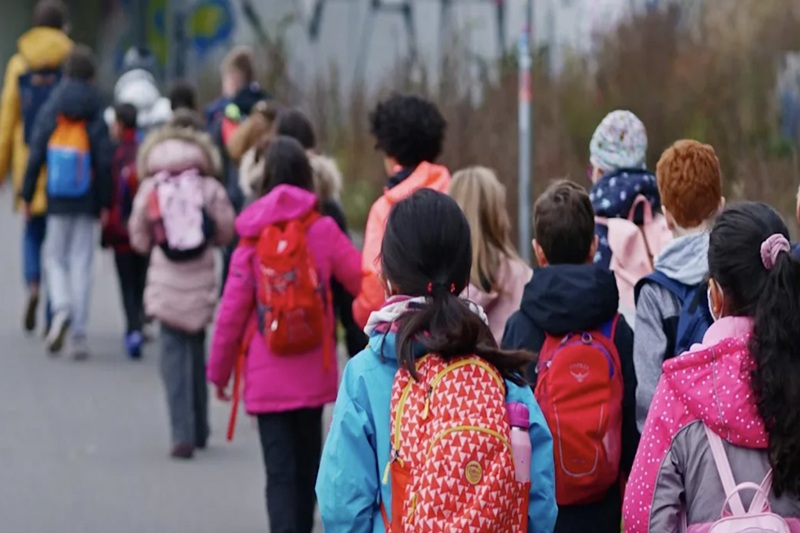
(C): Twitter
Karin Prien, the Education Minister’s recent proposal to introduce quotas restricting immigrants in German schools has sparked a huge national discussion. A CDU politician, Prien suggested limiting the share of immigrant students in schools to 30-40%, based on international models.
There were a lot of heated reactions. Principal Sabine Schwarz, who heads a school in North Rhine-Westphalia that has more than 80% of pupils with immigrant backgrounds, labeled the proposal unrealistic and discriminatory. “We don’t even have sufficient native German speaking students here” she stated. Parents are already avoiding diverse schools because they believe their children’s performance will suffer; a belief Schwarz disputed.
Support and Criticism Across the Spectrum
The German Teacher’s Association recognized the challenge of teaching without a certain level of competence in the German language. Nevertheless, it disagreed with quotas as they would likely be impractical and socially divisive. They applauded the EUR 20 billion investment in schools with high numbers of immigrant students. Education researcher Klaus Hurrelmann echoed the German Teachers’ Association stating that diverse classrooms enhance learning. However, this policy could discriminate against students with little German language knowledge and increase discrimination against immigrant students.
Student Voices and Systemic Struggles
The German federal student body denounced the proposal because it was stigmatizing children based on ethnicity, but they did indicate their support for universal language proficiency testing of four-year-olds, provided that the tests would apply to all children, not only immigrants.
Underlying the debate is Germany’s more general education crisis: declining PISA scores, 56,000 school drop-outs by 2023 and a serious shortage of 125,000 nursery teachers. There is consensus among the experts that language and integration presents the most urgent issue for children in early years.
As Germany becomes more diverse, the education system will need to deal with important questions about equality, integration and reform.