Kritika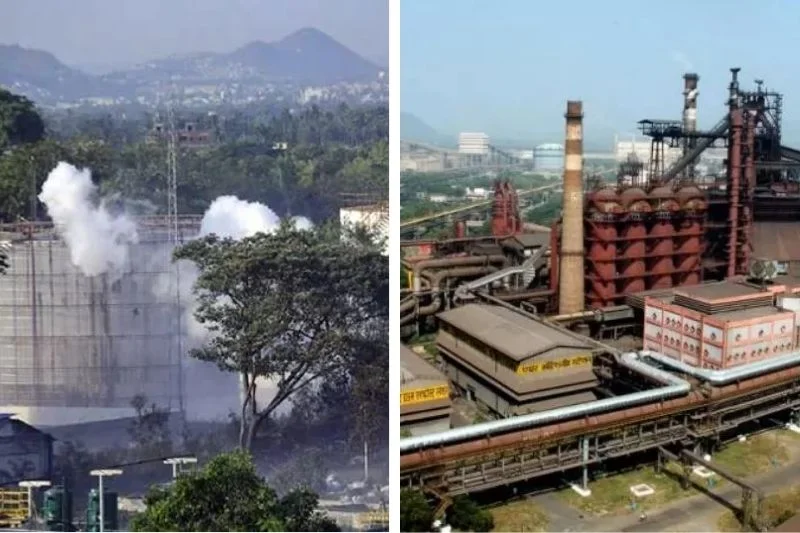
The Incident That Shook RINL’s Blast Furnace-1
On the night of 11th May 2026, a gas leak occurred at the Blast Furnace-1, Visakhapatnam Steel Plant (VSP) of the Rashtriya Ispat Nigam Limited (RINL), in which four employees collapsed to the ground due to toxic carbon monoxide fumes. The accident, which occurred during the third shift, amid a claim of “technical snagging”, has again brought the issue of safety in the steel industry and the overall weaknesses of the steel infrastructure of the public sector in the country to the forefront.
Three of the four workers who were hospitalised were treated in the hospital of the plant and discharged later, and the fourth was admitted to a private super-speciality hospital for advanced respiratory treatment. RINL officials said there was no loss of life, and initial investigations point to a pressure surge in the gas cleaning plant circuit, which is likely to be the cause of the incident.
A Pattern That Unions Say Cannot Be Ignored
The business-as-usual remedies are not enough for trade union leaders, who have established a national committee of inquiry into the matter. The Steel Plant Employees’ Union (SPEU) representatives visited the injured workers and had a word to point out the deteriorating maintenance condition and persistent shortage of manpower in the critical working areas, which they believed is increasing the chances of accidents and injuries in India, rather than reducing them.
The incident was not isolated, union officials said, urging a state-of-the-art technical review of the plant’s ageing facilities. Their calls are among the many trade union pleas for safety in the country – the government should conduct surprise inspections to find violations before they become a catastrophe in steel plants.
It’s simple logic. Audits that are scheduled provide management with time to gloss over issues. Unannounced inspections, unions say, are the only way to find out if hazardous gas, extreme heat and heavy machinery use facilities are compliant with safety standards.
Why Surprise Audits Are the Core Demand
But recent years have seen a proliferation of safety worries among steel workers as many public sector plants are underfunded, backlogged and are keeping hiring rates frozen. This can leave critical equipment, like gas recovery circuits, blast furnace pressure regulators, CO monitoring equipment, and many other such systems, in an unmaintained state, without a formal alarm sounding — until it’s a worker who collapses.
The rules for the safety of steel plants in India include provisions laid down under the Factories Act and by the Directorate General of Mines Safety (DGMS) and the Ministry of Steel, which require regular inspections. But the frequency and extent of the inspections are not adequate for the risk, especially in blast furnace processes, where carbon monoxide is always present but invisible.
There is also a link to accountability when it comes to the demand for surprise audits. If the inspections are scheduled in advance, what they show is seldom an accurate picture of what is going on.
Background of the Issue: Gas Leak at the Visakhapatnam Steel Plant in 2026
The incident that occurred in the month of May 2026 at the Visakhapatnam Steel Plant is not an isolated one considering that there have been numerous incidents related to gas leaks from steel plants across India in the year 2026. This may include small malfunctions or even narrowly avoided exposure cases. Regardless, union members believe that this should no longer continue.
RINL has been on the verge of privatisation and has been short of funds to invest in safety infrastructure, so it is possible that it was pressured to postpone investments in these capabilities. This is a risky manoeuvre in an area where one bad valve could result in one shift ending with four men unconscious.
What Needs to Change
Steel plant safety audits need to be more than just a compliance tick-list and more of a real risk-management tool. Expect some significant reforms, among them:
- Surprise audits of the premises by independent, third-party auditors at least twice a year – mandatory.
- Blast furnace Real-time CO monitoring and automatic alarms/gas isolation systems
- Sufficient staffing of maintenance and safety roles, no critical roles unfilled.
- Clear reporting of incidents that is visible to workers/union, not just management
- Improved escalation systems that ensure that all gas leaks, no matter how insignificant, are properly and promptly reviewed.
Conclusion
The Visakhapatnam Steel Plant gas leak is a wakeup call, and one that the steel industry in India can’t afford to sleep through. It is right for trade unions to advocate structural change as four employees recover, and an internal committee is meeting to discuss it. However, surprisingly, it appears that safety audits within Indian steel plants have not been a major request but simply the basic requirement for a sector with such a potential fire risk.
It remains to be seen whether it will be too late when the next disaster occurs.
Work, Salary & Job Updates Employees Are Watching
Why Are GitLab Workers Worried?
Explore how GitLab’s restructuring memo triggered employee anxiety and confusion.
Can AI Replace More Office Jobs?
Find out why one-person pods are worrying tech workers in 2026.
Who Gets Extra HRA Tax Relief?
Check out how employees can claim benefits under the new 50% rent rule.
Why Are Govt Staff Demanding Change?
Browse the new Family of 5 formula linked to the 8th Pay Commission.
Will MGNREGA Be Replaced Soon?
Uncover what the Viksit Bharat Rural Employment Act may mean for workers.