abi sri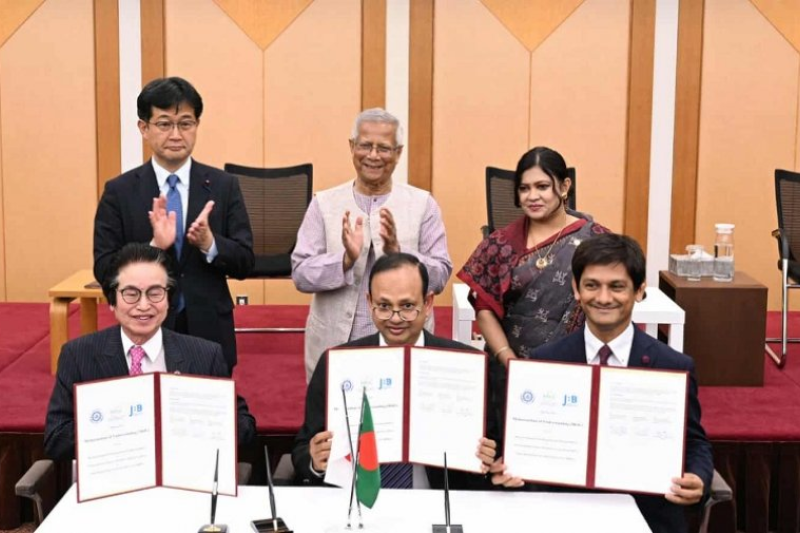
(C): Dhaka Dossier -twitter
Japan plans to hire at least 100,000 workers from Bangladesh in the next five years to combat labour shortages. The announcement was made at the “Bangladesh Seminar on Human Resources” hosted in Tokyo, attended by business leaders of Japan and by Nobel laureate Professor Muhammad Yunus.
Japan’s falling birth rates, combined with an ageing society, have resulted in a smaller workforce. According to the Japan International Cooperation Agency (JICA), Japan will need about 6.88 million foreign workers by 2040 to maintain its economic growth. With its relatively young and growing labour force, Bangladesh will be in a strong position to assist with this need.
In order to carry out this recruitment, the Bureau of Manpower, Employment and Training (BMET) of Bangladesh had signed MoUs with Japanese organisations such as Kaicom Dream Street and the National Business Support Combined Cooperatives. The agreements are intended to facilitate the sending of skilled Bangladeshi workers to Japan.
Professor Yunus highlighted many aspects of this opportunity, emphasising that it provided not just jobs but also an avenue for cultural exchange between the two countries. He mentioned that there would be great opportunities for Bangladeshi workers to not only gain experience but also add to both countries’ economies.
This is a new chapter in Bangladesh-Japan relations which provides excitement and real opportunity for Bangladeshi job seekers and also satisfies Japan’s labour needs.