abi sri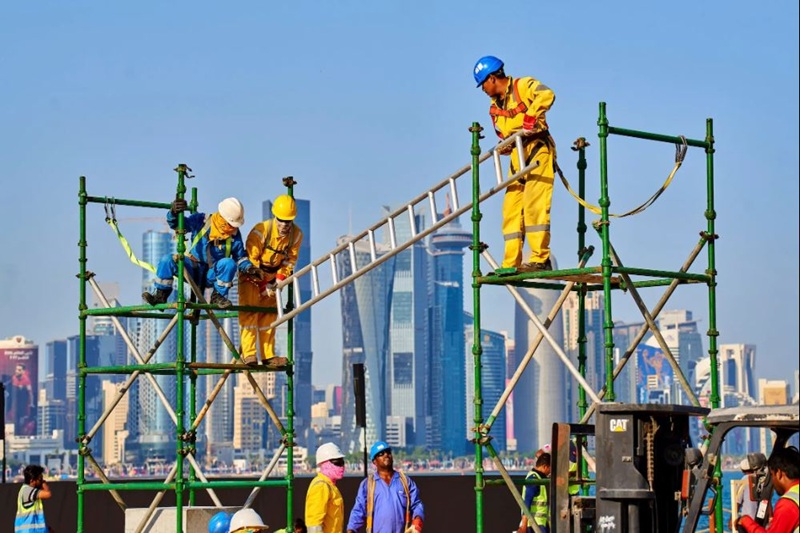
(C): Twitter
Last updated on August 6th, 2025 at 11:05 am
The GCC nations Saudi Arabia, UAE, Qatar, Kuwait, Oman, and Bahrain are among the leading recipients of foreign labor migration to date. Gulf migration trends during the past decade have been historically transforming due to economic diversification, nationalization strategies, and labor policy reforms. These phenomena are having far-reaching impacts on the GCC labor force, particularly the number and presence of foreign workers within the GCC. The following are the top 8 labor migration trends that are reshaping the region’s expatriate workers in the GCC.
1. Minimum wages and workers protection policies expand
- The Minimum Wage Attributes: The Minimum Wage Attributes subcategory reflects the perception of the workers, highlighting the structuring and amendment of the laws based on ILO standards with economic principles and social dialogue in view.
- The Minimum Wage Rate : The Minimum Wage Rate subcategory reflects the perception of the employers, analysing the effect of the wage rate on business survival, productivity, and labor management in line with ILO counsel and expert opinion.
2. Gradual Reforms to the Kafala Sponsorship System recent
The recent incremental liberalization of the Kafala sponsorship system in various Gulf states seeks to better protect the rights of migrant workers. Such reforms involve simplifying job mobility, abolishing exit permit requirements, and strengthening labor protections, representing a departure toward more equitable employment practices.
3. Saudi Arabia Emerges as Top Destination
Saudi Arabia is quickly becoming one of the world’s leading tourism destinations, with plans to welcome 150 million tourists every year by 2030 through Vision 2030. At the Future Hospitality Summit, experts noted the Kingdom’s emphasis on diversified tourism, human capacity development, and 362,000 additional hotel rooms to facilitate expansion.
4. Significant Remittance Flows Back to South Asia
As per MRFR, the APAC Remittance Market in 2023 reached USD 13.65 billion and is expected to expand to USD 21.38 billion during 2035. With a CAGR of 3.815% (2025–2035), this represents growth due to rising cross-border transactions and increasing demands for digital remittance services across the region.
5. Shift Toward Higher Skills & Upskilling
International labor markets are currently facing a strong tendency towards more-skilled occupations, driven by automation and digitalisation. Employer demands for employees to possess higher-level technical, analytical, and soft skills are increasing. As such, upskilling and reskilling are becoming increasingly important to workforce adaptability and long-term career growth.
6. Economic Diversification Drives Labour Demand Beyond Oil
Economic diversification in the oil-producing countries is reshaping labor demand, moving its focus away from oil-related jobs to vibrant industries such as tourism, renewable energy, logistics, and technology. Both the public and private sectors are significantly investing in building the workforce through vocational training, upskilling, and STEM competencies. This type of transformation is opening up more comprehensive employment prospects and sustainable growth and readies workforces for a stronger economic future outside the oil industry.
7. High Dependency on Foreign Workers in Private Sector
In the majority of economies within the GCC and internationally, the private sector is largely dependent on foreign workers, especially for low-skilled and mid-skilled positions. This reliance emphasises the urgent need for the protection of migrant worker rights as well as the promotion of equitable labor practices. It also draws attention to the necessity for investment in domestic workforce growth as well as diversified skill development to enhance national job opportunities.
8. Improving Legal Protections Amidst Human Rights Pressure
Governments across the globe are introducing legal reforms to consolidate human rights protections as a response to international pressure. Recently, there has been an improvement in judicial oversight, reducing abuse of coercive powers, and requiring legal protection for activists and vulnerable groups
Read Also: Singapore industries fear business losses with reduced migrant workforce